All our news

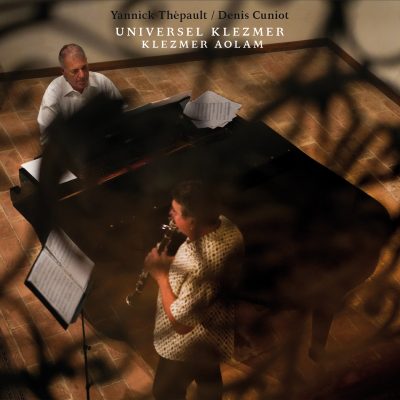
Yannick Thépault & Denis Cuniot present “Universel Klezmer – Klezmer Aolam”

The duo Yannick Thépault (clarinet) & Denis Cuniot (piano) will release their new album, “Universel Klezmer – Klezmer Aolam”, on Friday, November 6, 2026 (CD and digital) on Buda Musique / Socadisc. The album will be presented live during a series of concerts at the Rendez-vous d’Ailleurs (Paris, 20th arrondissement) on Thursday, November 19, Friday, November 20, Saturday, November 21, and Sunday, November 21. The first single, “Une maman et une tante aux petits soins – Zorgn”, will be available on October 16, 2026 on all platforms. 'This album was born out of a desire—shared with my friend Denis Cuniot—to perform works by great composers, some of whom were not Jewish, who had adapted traditional Hebrew melodies. The clarinet, with its infinite range of nuances, its wide range, and its timbre that sometimes resembles the human voice, gives the melody a distinct character. We sought to convey the meaning of the lyrics through our musical interpretation. A flower takes shape through its fragrance and our imagination. The interpretation of Hasidic music differs between the United States and Europe. In the U.S., performers emphasize the festive, urban aspect, no doubt influenced by jazz. In Europe, shaped by its history, the mood shifts from laughter to tears. Shostakovich said of Jewish music: “It is an ocean of tears with a burst of laughter in the middle.” The pieces we present are arrangements and free adaptations of the original scores. I have preserved their harmonic and rhythmic foundations and reinterpreted the melodies.' Yannick Thépault   Album Presentation Universel Klezmer (Klezmer Aolam) 'Jewish folk music, an expression of a long-standing tradition, transcends all boundaries, starting with those that separate the religious from the festive and classical composition from folk music. The composer and cellist Joachim Stutschewsky (Ukraine 1891–Israel 1982) set out to demonstrate this, through both music and words. In 1935, he published in Vienna a veritable manifesto of contemporary Jewish music, Mein Weg zur jüdischen Musik (My Path to Jewish Music). Born in the Russian Empire, Stutschewsky emigrated to Germany to study at the Leipzig Conservatory; he worked as an itinerant musician before settling in Vienna, where he worked in the tradition of Arnold Schönberg. After the Anschluss, he went to the Jewish community in Palestine, where he devoted himself to collecting the diverse Jewish musical traditions—Ashkenazi, Sephardic, Persian, and Yemeni. Stutschewsky never ceased to repeat that Klezmer is not a form of light music or folklore, even though it is often played by Schnorers—beggars—which he himself was before his time in Vienna. The title of this album, Universel Klezmer—universal Jewish music—can be seen as a double pleonasm, since the universal is the very essence of both Judaism and music. The word 'Klezmer' does not refer to a genre or a particular tradition; in Yiddish, it simply means 'musician.' This universal dimension did not escape Maurice Ravel, who drew inspiration from it in two ways: through the Aramaic sounds of the Kaddish and through those of Yiddish in his arrangements of popular Jewish songs. The most French of composers—whose *Boléro* is to musical heritage what the Eiffel Tower is to Paris—never ceased to draw inspiration from the music of the world. He orchestrated Mussorgsky’s Pictures at an Exhibition and was a champion and friend of Igor Stravinsky. At the height of World War I, he responded sharply to Saint-Saëns, Cortot, and Vincent d’Indy, who were urging the government to ban public performances of contemporary German and Austrian works so as not to have to pay royalties to nationals of enemy countries. 'It matters little to me that Mr. Schönberg is Austrian,' wrote Ravel, who considered him the most important of his contemporaries alongside the Russian Stravinsky, and he came to the defense of two citizens of the Habsburg Empire, Bartók and Kodály, who, though Hungarian, were nonetheless immense musicians. Ravel understood Bartók’s method, which drew on folk music and songs, challenging the principles of classical composition of the Viennese Holy Roman Empire of Harmony. During a tour of the United States in 1928, Ravel spent a few nights in Harlem’s jazz clubs in the company of George Gershwin. Upon his return, he wrote: 'You Americans take jazz too lightly ( …) it is jazz that will give birth to American national music.' As universal bridge-builders, Klezmer musicians encountered, on American soil, the descendants of African slaves. Like the singer Al Jolson, many Jewish musicians painted their faces with black shoe polish to join jazz bands. A classical clarinetist who had learned music in a Chicago synagogue, Benny Goodman became, in 1935, the first white man to form a jazz band, whose mixed membership defied racial segregation—then enshrined in the laws of several states and ingrained in the customs of the entire United States. (...)' Guy Konopnicki
2 October 2026

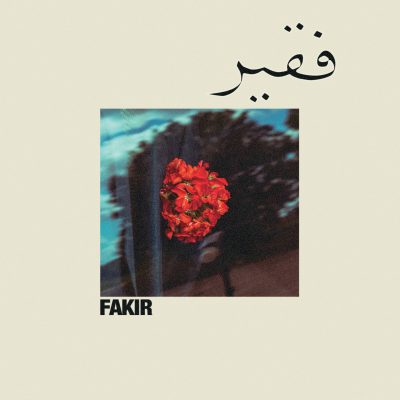
Fakir presents “Le temps de l’orage”

The Fakir trio will release their second album, ‘Le Temps de l’orage’, on 16 October 2026 (CD, digital and vinyl) via Raffut / Inouïe Distribution. The first single, ‘Orange express’, is already available on all streaming platforms. Fakir brings together Marwan Fakir (violin), Louis Desseigne (guitar and saz), and Pierre-Antoine Despatures (double bass). Defying conventions and habits, they have been forging their artistic path since 2018 Coming from different musical traditions, they tame and challenge each other, invent themselves and write together the story they want to tell — stories of borderlands and frontiers. Rituals, trances, and lace- like melodies paint an imaginary world traversed by flashes, frictions, surges of modernity and millennial traditions. With their second album due in october 2026, the trio weaves a new repertoire under the scorching fire of a merciless amplifier that makes certainties tremble. Hmadcha trances, feverish grooves, and heart-wrenching maqams bring the listener on a dream-like path.   The album ‘Le Temps de l’orage’: With ‘Le Temps de l’orage’, Fakir strikes out in a new direction and gives creativity centre stage. Eleven compositions make up this new repertoire, forged in the blazing heat of a merciless amplifier. Throughout the album, Marwan Fakir transforms his violin into a rabab, a kemence (a classical Ottoman instrument and ancestor of the violin), a gaita (a traditional Maghreb double-reed instrument reminiscent of the oboe), and a voice. In “Istihlal”, an improvised prelude to “Gbahi”, he demonstrates perfect mastery of space and silence in a gripping musical development, before launching into a trance inspired by the music of the Hmadchas, a Sufi brotherhood based in Morocco. After a few minutes of intense rhythmic energy, Louis Desseigne shatters the fabric of this procession with a post-Hendrix-style wall of sound that makes the valves of his Fender Bassman scream. With “Bleu de Nuit”, a heartfelt tribute to Gnawa music, the trio’s sound becomes more subdued, allowing us to hear, in hushed tones, the richness of the polyrhythms of this animist brotherhood. A collective solo emerges, letting us hear the jubilation of the interplay that animates the three musicians. The track “Le Temps de l’orage” makes skilful use of overdubs to create a grand chorus inspired by Amazigh music, uniting guitars, saz and lautar (a kind of skin-covered lute, a cousin of the Gnaoui guembri). “Orange Express” takes us on a breathless journey: an opening theme in the style of Bill Frisell, full of questions, gives way to a bowed double-bass solo that gradually unravels, propelling us towards an Armenian-inspired melody imbued with joyful nostalgia. Fakir charts a map of the intimate here—a sky on the verge of shifting—with free, deeply emotional music that brings ten years of musical exploration to a close and establishes a quiet certainty: music, sharing and bonds are what keep us standing and help us weather the storm. “Le Temps de l’orage” was recorded at Flow Studios (Chailland) in April 2025.
25 September 2026

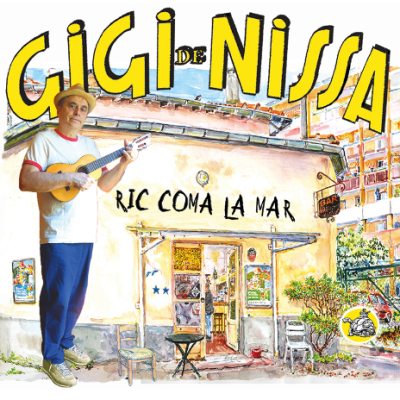
Gigi de Nissa presents ‘Ric coma la mar’

Gigi de Nissa will release his second album, ‘Ric coma la mar’, on 23 October 2026 (CD, digital and vinyl) via Manivette Records / Baco Distribution. The album will be presented on Friday 11 December 2026 on stage at La Péniche Anako (Paris, 19th arrondissement) during a special launch concert. The first single “Luna fortuna” is already available on all platforms As a singer-songwriter and performer, Louis Pastorelli continues to forge a unique artistic path with Gigi de Nissa, a journey that began in 2010 with a self-titled debut album acclaimed for the way it weaves together tradition and modernity, Occitan and French, folk heritage and a contemporary perspective. A committed figure in the Occitan cultural revival spearheaded in particular by Massilia Sound System and the Fabulous Trobadors, founder of the independent Nice Carnival and leader of the band NUX VOMICA, Louis Pastorelli has never ceased to create a dialogue between the history of Nice and the present. Under the name Gigi de Nissa, he explores a more intimate and narrative vein, in a spirit that is at once carnivalesque, satirical and deeply human. Line-up: Louis Pastorelli: vocals, rajão, guitars; Milena Pastorelli: diatonic harmonica, percussion, vocals, backing vocals; Alexandre Auria: guitars, espina, banjo, bass, backing vocals; Jérémy Couraut: guitars, espina; Félix Liperi: guitar; Leo Corrêa Merand: rabeca; Cédric Le Donne: drums; Frédérick Lacroix: bass; Artistic advisor: Moussu T   Gigi de Nissa returns with this second album, which is more collaborative in nature but still driven by the same desire to make a popular heritage resonate with today’s realities, and to give a voice to everyday life, celebrations, frustrations and joys that still permeate the neighbourhoods of Nice. And for this venture, he has surrounded himself with a loyal and close-knit team. The record label, Manivette Records, invited Moussu T (alias Tatou, François Ridel, leader of the bands Moussu T e lei Jovents and Massilia Sound System) to support the project as artistic consultant. A key figure on the Occitan and Marseille music scenes, his vision and high standards shape a warm, sophisticated sound that is deeply rooted in popular Mediterranean music. This new repertoire further affirms Gigi de Nissa’s uniqueness: music that draws as much from the streets of Nice as from the shores of the Mediterranean, where traditional repertoires interact naturally with contemporary sounds, music that is festive but lucid, intimate yet collective. Blending traditional elements, contemporary rhythms and social poetry, he paints a sensitive portrait of Nice and the world, as seen from home, the street and everyday life. Musically, this second album broadens the horizons. Alongside its Occitan and Mediterranean roots are Brazilian and Portuguese influences: swaying rhythms, rajão guitar, organic percussion by Jam Da Silva, and the rabeca played by the Brazilian Leonardo Côrrea... All these elements infuse the whole with a warm and personal vibe. In these new songs, Louis Pastorelli continues his creative work in the Occitan language, and more specifically in the Nice’s variety of Occitan (niçois), which he places at the heart of his writing. Combining social commentary, the poetry of everyday life and sensitive portraits, Gigi de Nissa sings of Nice in its living language and affirms the niçois as a fully contemporary language of creativity. From autumn 2026 onwards, Gigi de Nissa demonstrates that popular culture is not a relic: it is a living movement, a space for joyful resistance and sharing.
18 September 2026

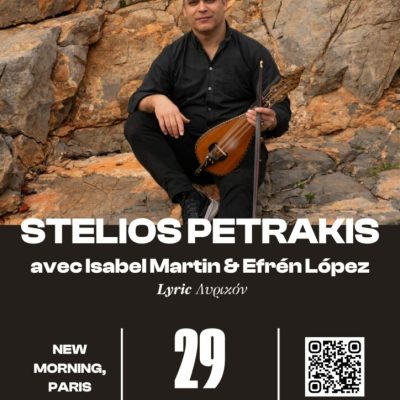
Stelios Petrakis presents ‘Lyric’ on the New Morning scene

Sorry, this entry is only available in FR.Le compositeur et luthier grec Stelios Petrakis présentera "Lyric"  son 10e album,  le 29/09/2026 sur la scène du mythique New Morning (Paris, 10e) en trio avec Isabel Martín et Efrén López. Ce nouvel opus sorti le 13 février 2026 chez Buda Musique / Socadisc avait rencontré un retour dithyrambique de la presse nationale et internationale.   Figure majeure des musiques de Méditerranée, Stelios Petrakis est l'un des plus grands ambassadeurs contemporains de la lyre crétoise. Originaire de Crète, il développe depuis plus de vingt ans un langage musical singulier, nourri par les traditions de son île mais résolument ouvert aux influences de l'Asie Mineure, du Proche-Orient et de l'Europe. Virtuose de la lyre, compositeur et facteur d'instruments, il fait dialoguer patrimoine et création avec une sensibilité rare. Line-up de la soirée:  Stelios Petrakis : lyre, luth ; Isabel Martin : voix, percussion ; Efrén López : mandoline, cuatro, davul   Biographie Stelios Petrakis : Compositeur et fabricant d'instruments, Stelios Petrakis a été initié à l'art de la lyre dès son plus jeune âge. Il a eu de nombreux professeurs influents lors de séminaires et de cours réguliers, maîtres de la musique orientale, tels que Ross Daly, Talip Ozkan, le Dr L. Subramaniam et bien d'autres. Il a beaucoup collaboré à des concerts et des enregistrements avec des musiciens importants de la scène internationale (Ross Daly, Chemiranis, Efren Lopez, etc.), avec nos musiciens traditionnels de musique crétoise (Giorgis Xylouris, Vassilis Stavrakakis), avec des compositeurs grecs et internationaux (Christos Leontis, Stamatis Spanoudakis, Stephanie Economou, Joseph Shirley) ainsi qu'avec d'autres musiciens dans des enregistrements pour des films, des disques et des concerts. Il est aujourd'hui l'un des principaux représentants et innovateurs de la musique traditionnelle, avec neuf disques personnels et de nombreuses distinctions internationales à son actif. Avec son quatuor, il fait voyager la musique crétoise aux quatre coins du monde, de l'Inde et la Malaisie au Théâtre de La Ville à Paris et au Carnegie Hall à New York, et presque partout ailleurs, l'ouvrant à un public toujours plus large. Les moments forts de sa carrière musicale sont l'ascension au sommet du classement World Music Charts Europe (juillet 2022) pour le CD « Spondi », l'annonce du CD « L'Art de la Lyra » comme le meilleur de l'année 2016 sur Radio France, ainsi que ses concerts à guichets fermés au Théâtre de la Ville (Paris) et au Carnegie Hall (New York). Au cinéma, il a largement participé aux enregistrements du film « My Big Fat Greek Wedding vol. 3 » de Nia Vardalos avec une musique de Stephanie Economou, aux enregistrements du film « Killer Heat » de Philippe Lacôte avec une musique de Joseph Shirley, tandis que le documentaire « Thalatta » de l'université de Thessalonique, qui traite de la surpêche en mer Égée, a été entièrement investi de sa propre musique. En tant que luthier, il possède son propre atelier en Crète, où il fabrique des lyres, des luths, des baglamas et d'autres instruments à cordes. Ses propres créations sont exposées dans des musées d'instruments de musique à travers le monde, tels que la « Cité de la musique » à Paris, au Japon, en France, en Pologne et en Grèce. Des musiciens célèbres du monde entier jouent de ses instruments, tels que Ross Daly, Efren Lopez, Kelly Thoma, Les Claypool, Sean Lennon, Giorgis Xylouris. Il est diplômé de la faculté de droit de l'université d'Athènes et parle anglais, français et turc.
16 September 2026

The Stella d’Oriente Ensemble presents “Alta va la luna”

Catalina Skinner & the Ensemble Stella d’Oriente, conducted by Pierre-Yves Binard, will release their new album Alta va la luna on November 6th, 2026 (CD and digital) on Mundo Azul / Inouïe Distribution. The album will be presented on Thursday, December 3rd, 2026 on stage at the Studio de l’Ermitage (Paris, 20th arrondissement) during a launch concert, featuring a special guest appearance by Laurie Billotet (oriental dance). A musical journey to the heart of the medieval Mediterranean The songs featured on this debut album originated in the medieval Mediterranean region, where Jewish, Christian and Muslim cultures coexisted, engaged in dialogue and enriched one another. The programme weaves three threads into a single tapestry: the Judeo-Spanish songs passed down after the expulsion of 1492, the Occitan and Catalan troubadours singing of courtly love, and the spiritual dialogue between the Cantigas de Santa Maria and Sufi chants. Amidst love laments and sacred chants, the voice of mezzo-soprano Catalina Skinner is accompanied by a rare ensemble of instruments – the oud, qanun, ney flutes, saz, medieval lutes, viols, violin bass, Indian harmonium and percussion – in which instruments from the Arab world and medieval European instruments echo one another, as if the two shores of the Mediterranean had always spoken the same language.   An ensemble with multiple identities The Stella d’Oriente ensemble embodies, in its very composition, the dialogue between cultures that it celebrates. The French, Colombian, Syrian, Lebanese, Occitan and Catalan origins of its six musicians form the living fabric of their performance.   Line-up: - Catalina Skinner: mezzo-soprano, percussion - Pierre-Yves Binard: baritone, percussion, Indian harmonium, musical direction - Iyad Haimour: qanun, oud, ney flutes, vocals - Jodël Grasset-Saruwatari: medieval lutes, qitara, oud - Guillem Gironès: treble viol, bass viol - Mahdi Hachem: saz, flutes, vielle, riq. In concert, the ensemble is joined by Laurie Billotet (oriental dance).   A note on the programme This programme arose from a simple insight: the repertoires we perform separately – Sephardic, troubadour, Christian sacred and Sufi – share not only themes but also modes, phrasing and ways of embellishing a melody. Yet simply placing them side by side is not enough; we must perform them as we are. We have not sought to reconstruct anything. Each piece is approached through the lens of our own cultures: certain Sephardic songs take on an Arabic flavour; a ‘canso’ by Bernart de Ventadorn is carried by the phrasing of a ney flute; a violin bass improvises in the Baroque style over a Sephardic lament. What this album conveys is not a restored repertoire, but the way in which these pieces circulate amongst six musicians from different cultural backgrounds. The instruments do the rest – the oud responds to the lute, of which it is the ancestor; the qanun to the viola; the qitara to the saz – and the five improvisations that punctuate the album allow each musician time to speak for themselves before the others join in. We recorded in October 2025 in a small church in the south-west of France, all in the same space, live to tape. It was the only way to achieve what we were looking for: voices and timbres blending together, musicians breathing as one.   Pierre-Yves Binard, Musical direction
4 September 2026

Tengerton presents “Ilch”

The Mongolian soloist quartet Tengerton will unveil “Ilch,” their new album (marking the 20th anniversary of Routes Nomades), upon its release (CD and digital) on September 25, 2026 via Buda Musique / Routes Nomades / Socadisc.   Line-up: - Uuganbaatar Tsend-Ochir: vocals, ikh khuur fiddle, choir - Nasanjargal Ganbold: throat-singing, morin khuur fiddle, bishguur oboe, tovshuur lute - Yesun-Erdene Bat: throat-singing, morin khuur fiddle, mouthharp - Dalaijargal Daansuren: throat-singing, morin khuur fiddle, tsuur flute   About the album: After An Anthology of Mongolian Khöömii, Khusugtun’s Jangar, Batsükh Dorj’s Ögbelerim and within the framework of its 20th anniversary, Routes Nomades produces the first album of TENGERTON. The poetic meaning of this new quartet of super soloists is a sound came from the sky through the yurt’s crown. Their first album, Ilch – symbolizes gentle human and musical warmth – is shaped by the morin khuur horse-head fiddle and the captivating khöömii throat singing, the two emblematic elements of Mongolian culture. Born in 2023 from the legendary Egshiglen, this four-generation-ensemble crosses traditional and classic Mongolian music with contemporary musical experiences. The blues, flamenco, jazz influences can be savoured, while the chamber music arrangements enhance the steppe music. Tengerton reveals its richness in the quartet's subtle sound, the beauty of the vocals, and the precision of the rhythmic, all delivered with perfectly controlled energy. The virtuosity of their music is imbued with nuances like the reflections of clouds drifting across the landscape. By sharing the deepest sounds and emotions with its audience, the group recalls the symbiosis between human and nature, appeals to respect for Mother Earth and traditional cultures. From Mongolia to the West, Tengerton has established itself as a major international group, a leading force in the dissemination of traditional Mongolian music. A new musical wind is blowing across the steppe...
28 August 2026

Sidi Bémol presents “Guellal Montréal”

Sidi Bémol, also known as Hocine Boukella, is set to release ‘Guellal Montréal’, his 13th album as a singer-songwriter, which marks the culmination of a 30-year career! This new album will be released on 18 September 2026 (digitally and on CD) via CSB Productions / L’Autre Distribution. Also worth noting is the publication of a book on 18 September 2026, featuring lyrics, translations, sheet music... The first single, “Les Menottes”, has been available since 5 June 2026 on all platforms. The second single, “Chicoutimiya”, will be available on 26 June 2026. Guellal Montréal is a musical project born from the encounter between the Berber traditions of northwestern Algeria and the Indigenous cultures of Quebec. Through this album, Hocine Boukella, also known as Cheikh Sidi Bemol, continues an artistic exploration he began several years ago, focusing on the guellal—an ancestral Berber percussion instrument—the melhoun— sung poetry considered one of the precursors of raï—and the possible connections between these cultural heritages and Indigenous American spiritualities.   Line-up: Hocine BOUKELLA: vocals and guitar; Youssef BOUKELLA: bass and backing vocals; Abdenour DJEMAÏ: guitar and backing vocals; Maamoun DEHANE: drums and backing vocals. Guest: Mehdi ASKEUR: guellal and backing vocals.   The starting point for this album is the guellal, the central instrument of Oran’s folk music. With its deep bass notes and sharp, crisp beats, it has accompanied the songs of the melhoun for centuries—this rhythmic poetry performed by singer-poets who recount stories of the world in cafés, markets, and popular festivals. At a very young age, his discovery of masters like Cheikh Hamada left a profound impression on Hocine Boukella. A passionate fan of blues and rock, he immediately sensed a kinship between melhoun and the blues: the same emotional intensity, the same way of transforming poetry into vibration. Through his travels in Quebec, he discovered Indigenous cultures through their music and, above all, their poetry. The writings of Joséphine Bacon and Natasha Kanapé Fontaine stirred in him an emotion similar to the one he had felt when encountering traditional Berber poetry. Despite the distance between these peoples, he found a shared connection to nature, memory, and life itself. It was from this insight that Guellal Montréal was born: a dialogue between languages, rhythms, and imaginations. The songs blend Arabic, Kabyle, French, and English, drawing inspiration from melhoun as well as traditional and contemporary Indigenous texts. To bring this project to life, he collaborated with Tacfarinas Kichou, a Quebec-based percussionist and instrument maker of Algerian origin whom he met in Montreal. Passionate about traditional rhythms from around the world, Sidi Bémol has developed a unique approach to the guellal by designing his own instruments and incorporating contemporary and Native American influences into them. Guellal Montréal is thus an album about passing on traditions and cultural fusion, where traditions engage in a free dialogue with the sounds of today. It is a musical journey between Algeria and Quebec, between ancestral memory and contemporary creation.
17 June 2026

L’Alba presents “Vivu”

The Corsican polyphonic group L'Alba will unveil ‘Vivu’, their eighth album (physical and digital version) and the first 'live' one, on June 12th, 2026, through Buda Musique / Socadisc. Until now, no L'Alba live album existed. That has changed, now that ‘Vivu’ has come to fill that gap. Their remarkable live performances fully justify this release. It features titles taken from their studio albums, and we can appreciate the nuances these versions bring to each one of them: with presence, respiration, emotion, and even a touching fragility, the term ‘live music’ takes on its full meaning. ‘Vivu’ invites us to experience a captivating intimacy with the talented musicians of L'Alba. For the record: L’Alba takes pleasure in showing that the Corsican musical tradition is not static but, on the contrary, dynamic and constantly evolving. Its music, timeless and open to the world, affirms an ever-more Mediterranean orientation. L’Alba occupies a prominent place in the Corsican musical landscape. Its creative approach is guided by respect for the polyphonic heritage whilst incorporating new influences drawn from cultures across the globe, such as North Africa, Italy, Greece and Portugal.   Distribution: Laurent Barbolosi: vocals, violin; Antoine-Léonard Belgodere: guitar, mandolin; Eric Ferrari: bass; François Guironnet: vocals, wind instruments; Sébastien Lafarge: vocals, harmonium, guitar; Ghjuvanfrancescu Mattei: vocals, guitar, mandola; Petrughjuvanni Mattei: vocals, guitar
22 May 2026

Lalo Zanelli presents “Solar”

Argentinian composer, pianist and arranger Lalo Zanelli has just unveiled ‘Solar’, his fourth album under his own name, to mark its release (on CD and digitally) on 13 March 2026 via Buda Musique / Socadisc. “I’ve called this album "Solar", after one of the tracks. "Solar", like hope, the light that always returns, guiding us through life. I’d like to dedicate it to that, to the hope of a better world. The album is a collection of microcosms, written over the last four or five years. These pieces are true to my world, where I blend the music that is dear to me, that inspires me naturally and that has accompanied me throughout these years. Although I was steeped in the music of my homeland, tango and Argentine folk, as a pre-teen musician in Buenos Aires, I immersed myself in rock. Upon my arrival in Paris in 1983, I discovered jazz, which I have never strayed from since. Then, I rediscovered tango, ‘in Paris!’, Argentine folk music, and the music and rhythms of the world. At the same time, my studies immersed me in orchestral composition for film music. My experiences as a pianist, arranger and composer have been enriching, working with countless artists from such diverse backgrounds as Gotan Project, François Beranger, Daniel Melingo, Alfredo Arias… and many others in the world of jazz. All these experiences are reflected in this album, which I describe as binary: between action and contemplation, between rage and introspection, between ‘clouds and sunshine’, as illustrated on the cover. I was able to create this music thanks to the participation of some of my old musician friends, whom I call La Orquesta Modulable la Buena Unión, and whom I have the honour of introducing: (Magic) Malik Mezzadri, Minino Garay, Didier Ithursarry, Simon Drappier, Javier Estrella, Leandro Guffanti, Diego Lipy, Noé Codjia and Fabrizio Colombo. But also thanks to the participation of my two daughters, Maëla and Margo Zanelli.” Lalo Zanelli   On this new album, Lalo Zanelli (piano, vocals, percussion) is accompanied by the following musicians: Didier Ithursarry – accordion Diego Lipy – classical guitar, electric guitar Fabrizio Colombo – bandoneon Javier Estrella – drums, percussion Leandro Guffanti – tenor and soprano saxophone Noé Codjia – trumpet Simon Drappier – double bass, electric bass Malik Mezzadri – flute Minino Garay – drums, percussion Margo Zanelli – vocals, pandeiro Maëla Zanelli – vocals   Biography of Lalo Zanelli : A composer, pianist and arranger, Lalo Zanelli was born in Buenos Aires in 1959 and has lived in France since 1983. In Buenos Aires, he taught himself to play the guitar at a very early age. For his first concerts at the age of 13, he immersed himself in rock music in its various forms. Later, he studied piano and composition with Luis Maria Corallini. In Paris, he discovered jazz and ‘rediscovered’ tango. He studied under Gustavo Beytelman, Bernard Maury and François Jeanneau… From 1984 to 1986, he attended the Film Music Composition course led by Laurent Petit Girard at the École Normale de Musique, where he was unanimously awarded First Prize. He divides his time between performing and composing. Lalo Zanelli formed the septet, then the OMBÚ quintet in 1993, a vehicle for his own unique and original musical language through which his many influences are expressed; with them he recorded three albums. His fourth solo album, ‘Solar’, has just been released by Buda Musique. This time, he has surrounded himself with some of his old musician friends to form a unique ensemble offering a more varied sound palette: La Orquesta Modulable la Buena Unión. His compositions have been re-recorded and performed by various artists such as François Beranger, Minino Garay, Daniel Mille, Fabrice Allemand, Pierre Bertrand, Mandy Lerouge, Martin Bruhn, Fernando Fiszbein… He is currently working on orchestrations and arrangements of his own works for a nine-piece chamber orchestra, following a commission from the Arsonic Auditorium and Creation Centre in Mons, Belgium. This is a new work intended for a one-off performance scheduled for 7 July 2026.   He has collaborated on projects with artists from a variety of fields: Pianist and arranger (2001–2011) for the Gotan Project, with whom he toured the world, performing at the most prestigious festivals and concert halls (including the Hollywood Bowl in Los Angeles and the Sydney Opera House). He was the pianist, arranger and composer for François Beranger, with whom he recorded his last three albums (1996–2003). He has worked as a pianist, composer and arranger with Minino Garay on several albums, Tryö (Ce que l’on sème), and in 2018 Mandy Lerouge entrusted him with the arrangements and piano for ‘La Madrugada’; he has also worked with Daniel Melingo on his European tours, as well as Francis Lalanne, Lulendo and Raul Paz… Lalo Zanelli is also a film composer: “Ma place au soleil” (2007) starring André Dussollier, Nicole Garcia and Jacques Dutronc; “Cherche fiancé tout frais payé” (2008) starring Claudia Lamy, Bruno Salomone and Claudia Cardinale. He has worked in theatre for Alfredo Arias (“Mortadela”, Molière Award 1993, “Fous de Folies” at the Folies Bergères in 1995 and “Le Faust Argentin”, 1996…) and has composed numerous scores for plays and short films.
24 April 2026

Rua Das Pretas presents “Povo Brasileiro”

The collective Rua Das Pretas, led by the Brazilian composer and guitarist Pierre Aderne—a pioneer of contemporary and world music who has collaborated with internationally renowned artists such as Seu Jorge, Melody Gardot, Tito Paris, Sara Tavares and Madeleine Peyroux, will unveil the album “Povo Brasileiro” (Aderne’s 12th album) which is due for digital release on 10 April 2026 (and later on vinyl) via Harmonia / The Orchard. This album, along with the short film of the same name, will be presented on Tuesday 12 May 2026 at 8.00 pm on the stage of the Studio de L'Ermitage, during a special launch concert. Povo Brasileiro, the new album accompanied by a short film by Pierre Aderne and the Rua Das Pretas collective, takes a key text (by Darcy Ribeiro) to explore what the Atlantic has wrought – peoples, languages, divisions, movements – without resorting to nostalgia. Povo Brasileiro transforms Darcy Ribeiro’s classic into a sonic and narrative tapestry. Recorded at the Casa Museu Darcy Ribeiro (Maricá, Rio de Janeiro) – in the house designed by Niemeyer and inspired by Tupinambá villages – the project brings together musicians from Brazil, Cape Verde and Portugal. A contemporary journey through Atlantic memories, where aesthetics serve a purpose: to articulate identity without freezing it, memory without turning it into a museum piece. The album stems from a political question, not from exoticism. Darcy Ribeiro conceives of Brazil as a country forged through violence, forced encounters, resistance and reconstruction. Pierre Aderne translates this tension into music: rather than “telling the story of Brazil”, he brings the frictions to the fore – what the Atlantic has shattered and what it has created. Rua Das Pretas functions as a living cultural space: the Cape Verdean singer Zulu (Boa Vista), the Portuguese fado singer Ana Margarida Prado, the multi-instrumentalist Nilson Dourado (São Paulo / Sintra), the flautist Letícia Malvares (Rio / Madrid), and musicians from Cordão do Boitatá (Kiko Horta and Carlinhos 7 cordas), amongst others. Here, styles do not merely adorn; they engage in dialogue. Samba, fado, Afro-Brazilian music and song respond to one another like contradictory arguments, then weave themselves back together.   Rua das Preta (background) Founded in Rio de Janeiro two decades ago, the project moved to Lisbon around fifteen years ago. Initially an intimate gathering, it has become a major hub of the Portuguese-speaking music scene, frequented by artists such as Caetano Veloso, Gilberto Gil, Ana Moura, Carminho, Tito Paris, José Eduardo Agualusa, Melody Gardot and Sara Tavares, amongst others. Tours in major venues across Portugal (Coliseu, CCB...) and a three-season music series on RTP1.   Pierre Aderne (bio) Pierre Aderne & Melody Gardot Before the creation of Rua das Pretas, Pierre Aderne was already a pioneer in contemporary and world music. Co-author of Mina Do Condómino, Seu Jorge’s first hit, he has released an album with a cumulative 300 million streams and several tracks played on French radio, performed as a duet with Melody Gardot. His album Sunset in the Blue includes tracks such as It’s Magnifique, From Paris With Love, If You Love Me and Um Beijo. He also undertook a summer tour of Japan in 2016, with concerts at Billboard Live in Tokyo and Osaka, at the Blue Note in Nagoya, as well as collaborations at L’Olympia. Born in Toulouse (France), to a Brazilian mother and a Portuguese father; grew up between Rio de Janeiro and Brasília. 11 albums released, including Doces Cariocas (2009) – Best Album at the Prêmio de Música Brasileira — Mapa dos Rios (with Moacyr Luz, 2023), and the albums Rua Das Pretas (Lisboa Edition, 2018; Um copo de fado, dois de bossa, 2021). Collaborations / duets : Seu Jorge, Melody Gardot, Tito Paris, Sara Tavares, Madeleine Peyroux, among others. With Melody Gardot: Pierre Aderne co-wrote the songs C’est magnifique, From Paris With Love, If You Love Me and Um Beijo with Melody Gardot for the album Sunset In The Blue ... This long-standing collaboration between Melody and Pierre began in 2014 with the duets Limoeiro and Melodia e Letra, written and performed by the pair. Short film Rua das Pretas - Povo Brasileiro Filmed between Rio de Janeiro and Lisbon. Director: Pierre Aderne Screenplay: Jorge Araújo (Cape Verdean writer and journalist). Directors of Photography (DOP): Daniel Lobo, Markão Oliveira, Manuel Águas, Tito Gonzalez Garcia, Samir Abujanra, Carlos Mendes Pereira. Editing, motion design and generative AI: Edson Rosas. Synopsis: a symbolic reinterpretation of the Atlantic routes – the “washing” of the caravels upon their return to Rio, this time performed by musicians from three continents united by the Portuguese language (Brazilian and African).
3 April 2026

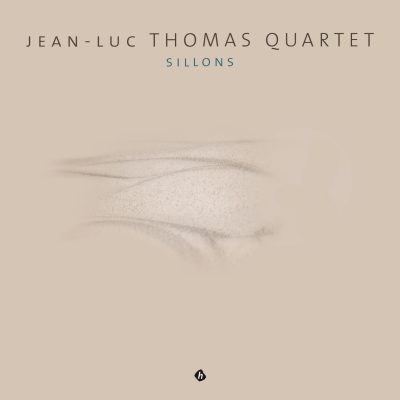
Jean-Luc Thomas Quartet presents “Sillons”

Jean-Luc Thomas Quartet will unveil ‘Sillons’, Jean-Luc Thomas's 11th album released under his own name by Hirustica, on its release date of 8 May 2026 (digital and CD) by Hirustica / InOuïe Distribution. The single ‘Takamba Yacouba’ has been available since 6 March 2026 on all platforms. After 25 years of experimentation, encounters and travels, flutist and composer Jean-Luc Thomas wanted to create a group in his own name, the Jean-Luc Thomas Quartet. For this new musical adventure, he has surrounded himself with musicians from the national scene, coming from jazz, traditional music and even early music. Together, they share a taste for melody, rhythm and improvisation, but also an openness to each other and to the cultures of the world. Following this creation and a series of concerts, Jean-Luc Thomas wanted to produce an album entitled ‘Sillons’. This album is intended to be both a musical travel journal and a vibrant tribute to all the masters he has encountered along the way: from the warmth of festoù-noz and pubs nourished by oral tradition to the popular music of Niger, Brazil and India. Cast: Jean-Luc Thomas (flutes, composition and arrangements) Simon Le Doaré (double bass, arrangements and orchestration) Timothée Le Net (diatonic accordion and arrangements) Hugo Pottin (drums and arrangements) Guest artists: Catherine Delaunay (clarinets); Marie-Suzanne de Loye (viola da gamba); Line Willerval (gadulka). It can be learned, taught and theorised, but music will never completely break away from its roots. We must always be more open to the world and those who inhabit it. No one understands this requirement better than Jean-Luc Thomas, now one of France's greatest flute players in the field of traditional and improvised music. Originally from Trégor, his musical horizons continue to expand as he travels the world. Jean-Luc Thomas collaborates with musicians and singers from Brittany, Mali, Poland, Brazil, India and the Arab world, including traditional, classical and jazz musicians (Carlos Malta, Michel Godard, Yacouba Moumouni, Vitor Lopes, Ravichandra Kulur, etc.), and joined the Théâtre Équestre Zingaro (‘Ex-Anima’) for three years. A tireless explorer of the world and its traditions, he has never compromised his artistic integrity for commercial gain. In all his attempts to unite different musical styles, Jean-Luc Thomas has never been satisfied with formulas, tricks or shortcuts. For him, human dignity is not something to be traded: ‘We receive such great things...,’ he marvels. ‘My flute has opened the doors of the world to me.’ And it is a whole world that his flute invites us to discover in return. Adapted from the biography written by Louis-Julien Nicolaou (Les Inrocks – Télérama)
27 March 2026

Mansfarroll presents “África sí”

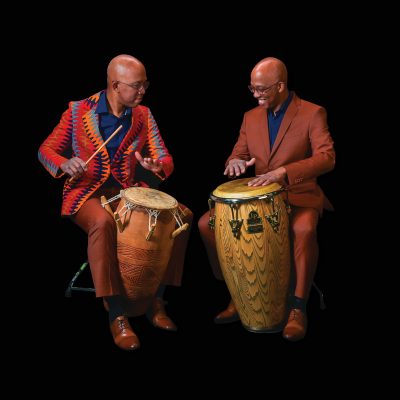
Mansfarroll, a Cuban composer and percussionist based in France since 2002, will release his third album, África sí, on 10/04/2026 on CD and digitally via M. Percuson / InOuïe Distribution. "África sí", the first single from this new opus, is already available on all platforms! There is a link between Afro and Cuban music. In geography, it is the Atlantic; in this album, it is the composer and percussionist Mansfarroll who plays this role. African captives deported to the Americas introduced their music there. The Caribbean island quickly ‘Cubanised’ it. Since then, as people have crossed the Atlantic, exchanges have continued, from east to west and west to east. Mansfarroll helps us rediscover the deep ties that unite the African continent with the Caribbean island, Congolese rumbas with Cuban rumbas, Ghanaian high-life with tumba francesa, jazz with the whirlwind of Afro-Cuban rhythms... On this album, Mansfarroll (compositions and arrangements, percussion, backing vocals) is accompanied by leading artists from the Afro-jazz scene: Yaroldy Abreu Robles: percussion, vocals (tracks 1-10) Ballaké Sissoko: kora (tracks 3, 7) Pierre Marcault: djembe, bougarabou (tracks 2, 8, 9) Patrick Bebey: pygmy flute and kalimba (tracks 6, 7) Jorge Vistel Serrano: trumpet (tracks 1, 2, 4, 5, 6, 9) Irving Acao Sierra: tenor saxophone, soprano saxophone and flute (tracks 1, 2, 4, 6, 10) Julien Chirol: trombone (tracks 1, 2, 4, 6, 9) Aude Publes Garcia: vocals and backing vocals (tracks 1, 2, 3, 4, 5, 8, 10) Monika Kabasele: vocals and backing vocals (tracks 1, 2, 3, 4, 5, 8) José Ramón Cabrera Montes de OcaJ: piano-Fender Rhodes (tracks 1, 2, 4, 5, 6, 8, 9, 10) Felipe Cabrera Cardenas: double bass (tracks 1, 2, 8, 9, 10) Gino Chantoiseau: bass guitar (tracks 4, 5, 6) Abdoulaye Kouyaté: electric guitar (tracks 1, 4, 6) Daniel Garlitsky: violin (tracks 2, 10) Jérémie Visseaux: violin (tracks 2, 10) Nina Tonji: viola (tracks 2, 10) Mimi Sunnerstam: cello (tracks 2, 10). Mansfarroll biography: In Cuba, he toured with Maraca y Otra vison and the group Síntesis las Hermanas Faez y la Casa de la Trova. Based in France, he collaborated with musicians and groups such as Chucho Valdés, Ibrahim Maalouf, Ernesto 'Tito " Puentes, David Murray, Patrice Caratini, Julien Lourau, Camille Bertault; major international artists such as Rosalia, Angélique Kidjo, Las Maravillas de Mali with Mory Kanté; French pop artists such as Charles Aznavour, Michel Fugain, Clara Luciani, and many others. He played at the opening of the Paris 2024 Olympic Games (Lady Gaga), the opening of the Paralympic Games with Christine and the Queens, and the Parade of Champions with Philippe Katherine, Christine and the Queens, Cerrone, and Amadou and Mariam. He has released two CDs, Utop!a Guantanamera, nominated for the Cubadisco award, and Dizzy El Afrocubano, a tribute to the centenary of Dizzy Gillespie's birth.
20 March 2026