All our news

Lalo Zanelli presents “Solar”

Argentinian composer, pianist and arranger Lalo Zanelli has just unveiled ‘Solar’, his fourth album under his own name, to mark its release (on CD and digitally) on 13 March 2026 via Buda Musique / Socadisc. “I’ve called this album "Solar", after one of the tracks. "Solar", like hope, the light that always returns, guiding us through life. I’d like to dedicate it to that, to the hope of a better world. The album is a collection of microcosms, written over the last four or five years. These pieces are true to my world, where I blend the music that is dear to me, that inspires me naturally and that has accompanied me throughout these years. Although I was steeped in the music of my homeland, tango and Argentine folk, as a pre-teen musician in Buenos Aires, I immersed myself in rock. Upon my arrival in Paris in 1983, I discovered jazz, which I have never strayed from since. Then, I rediscovered tango, ‘in Paris!’, Argentine folk music, and the music and rhythms of the world. At the same time, my studies immersed me in orchestral composition for film music. My experiences as a pianist, arranger and composer have been enriching, working with countless artists from such diverse backgrounds as Gotan Project, François Beranger, Daniel Melingo, Alfredo Arias… and many others in the world of jazz. All these experiences are reflected in this album, which I describe as binary: between action and contemplation, between rage and introspection, between ‘clouds and sunshine’, as illustrated on the cover. I was able to create this music thanks to the participation of some of my old musician friends, whom I call La Orquesta Modulable la Buena Unión, and whom I have the honour of introducing: (Magic) Malik Mezzadri, Minino Garay, Didier Ithursarry, Simon Drappier, Javier Estrella, Leandro Guffanti, Diego Lipy, Noé Codjia and Fabrizio Colombo. But also thanks to the participation of my two daughters, Maëla and Margo Zanelli.” Lalo Zanelli   On this new album, Lalo Zanelli (piano, vocals, percussion) is accompanied by the following musicians: Didier Ithursarry – accordion Diego Lipy – classical guitar, electric guitar Fabrizio Colombo – bandoneon Javier Estrella – drums, percussion Leandro Guffanti – tenor and soprano saxophone Noé Codjia – trumpet Simon Drappier – double bass, electric bass Malik Mezzadri – flute Minino Garay – drums, percussion Margo Zanelli – vocals, pandeiro Maëla Zanelli – vocals   Biography of Lalo Zanelli : A composer, pianist and arranger, Lalo Zanelli was born in Buenos Aires in 1959 and has lived in France since 1983. In Buenos Aires, he taught himself to play the guitar at a very early age. For his first concerts at the age of 13, he immersed himself in rock music in its various forms. Later, he studied piano and composition with Luis Maria Corallini. In Paris, he discovered jazz and ‘rediscovered’ tango. He studied under Gustavo Beytelman, Bernard Maury and François Jeanneau… From 1984 to 1986, he attended the Film Music Composition course led by Laurent Petit Girard at the École Normale de Musique, where he was unanimously awarded First Prize. He divides his time between performing and composing. Lalo Zanelli formed the septet, then the OMBÚ quintet in 1993, a vehicle for his own unique and original musical language through which his many influences are expressed; with them he recorded three albums. His fourth solo album, ‘Solar’, has just been released by Buda Musique. This time, he has surrounded himself with some of his old musician friends to form a unique ensemble offering a more varied sound palette: La Orquesta Modulable la Buena Unión. His compositions have been re-recorded and performed by various artists such as François Beranger, Minino Garay, Daniel Mille, Fabrice Allemand, Pierre Bertrand, Mandy Lerouge, Martin Bruhn, Fernando Fiszbein… He is currently working on orchestrations and arrangements of his own works for a nine-piece chamber orchestra, following a commission from the Arsonic Auditorium and Creation Centre in Mons, Belgium. This is a new work intended for a one-off performance scheduled for 7 July 2026.   He has collaborated on projects with artists from a variety of fields: Pianist and arranger (2001–2011) for the Gotan Project, with whom he toured the world, performing at the most prestigious festivals and concert halls (including the Hollywood Bowl in Los Angeles and the Sydney Opera House). He was the pianist, arranger and composer for François Beranger, with whom he recorded his last three albums (1996–2003). He has worked as a pianist, composer and arranger with Minino Garay on several albums, Tryö (Ce que l’on sème), and in 2018 Mandy Lerouge entrusted him with the arrangements and piano for ‘La Madrugada’; he has also worked with Daniel Melingo on his European tours, as well as Francis Lalanne, Lulendo and Raul Paz… Lalo Zanelli is also a film composer: “Ma place au soleil” (2007) starring André Dussollier, Nicole Garcia and Jacques Dutronc; “Cherche fiancé tout frais payé” (2008) starring Claudia Lamy, Bruno Salomone and Claudia Cardinale. He has worked in theatre for Alfredo Arias (“Mortadela”, Molière Award 1993, “Fous de Folies” at the Folies Bergères in 1995 and “Le Faust Argentin”, 1996…) and has composed numerous scores for plays and short films.
24 April 2026

Rua Das Pretas presents “Povo Brasileiro”

The collective Rua Das Pretas, led by the Brazilian composer and guitarist Pierre Aderne—a pioneer of contemporary and world music who has collaborated with internationally renowned artists such as Seu Jorge, Melody Gardot, Tito Paris, Sara Tavares and Madeleine Peyroux, will unveil the album “Povo Brasileiro” (Aderne’s 12th album) which is due for digital release on 10 April 2026 (and later on vinyl) via Harmonia / The Orchard. This album, along with the short film of the same name, will be presented on Tuesday 12 May 2026 at 8.00 pm on the stage of the Studio de L'Ermitage, during a special launch concert. Povo Brasileiro, the new album accompanied by a short film by Pierre Aderne and the Rua Das Pretas collective, takes a key text (by Darcy Ribeiro) to explore what the Atlantic has wrought – peoples, languages, divisions, movements – without resorting to nostalgia. Povo Brasileiro transforms Darcy Ribeiro’s classic into a sonic and narrative tapestry. Recorded at the Casa Museu Darcy Ribeiro (Maricá, Rio de Janeiro) – in the house designed by Niemeyer and inspired by Tupinambá villages – the project brings together musicians from Brazil, Cape Verde and Portugal. A contemporary journey through Atlantic memories, where aesthetics serve a purpose: to articulate identity without freezing it, memory without turning it into a museum piece. The album stems from a political question, not from exoticism. Darcy Ribeiro conceives of Brazil as a country forged through violence, forced encounters, resistance and reconstruction. Pierre Aderne translates this tension into music: rather than “telling the story of Brazil”, he brings the frictions to the fore – what the Atlantic has shattered and what it has created. Rua Das Pretas functions as a living cultural space: the Cape Verdean singer Zulu (Boa Vista), the Portuguese fado singer Ana Margarida Prado, the multi-instrumentalist Nilson Dourado (São Paulo / Sintra), the flautist Letícia Malvares (Rio / Madrid), and musicians from Cordão do Boitatá (Kiko Horta and Carlinhos 7 cordas), amongst others. Here, styles do not merely adorn; they engage in dialogue. Samba, fado, Afro-Brazilian music and song respond to one another like contradictory arguments, then weave themselves back together.   Rua das Preta (background) Founded in Rio de Janeiro two decades ago, the project moved to Lisbon around fifteen years ago. Initially an intimate gathering, it has become a major hub of the Portuguese-speaking music scene, frequented by artists such as Caetano Veloso, Gilberto Gil, Ana Moura, Carminho, Tito Paris, José Eduardo Agualusa, Melody Gardot and Sara Tavares, amongst others. Tours in major venues across Portugal (Coliseu, CCB...) and a three-season music series on RTP1.   Pierre Aderne (bio) Pierre Aderne & Melody Gardot Before the creation of Rua das Pretas, Pierre Aderne was already a pioneer in contemporary and world music. Co-author of Mina Do Condómino, Seu Jorge’s first hit, he has released an album with a cumulative 300 million streams and several tracks played on French radio, performed as a duet with Melody Gardot. His album Sunset in the Blue includes tracks such as It’s Magnifique, From Paris With Love, If You Love Me and Um Beijo. He also undertook a summer tour of Japan in 2016, with concerts at Billboard Live in Tokyo and Osaka, at the Blue Note in Nagoya, as well as collaborations at L’Olympia. Born in Toulouse (France), to a Brazilian mother and a Portuguese father; grew up between Rio de Janeiro and Brasília. 11 albums released, including Doces Cariocas (2009) – Best Album at the Prêmio de Música Brasileira — Mapa dos Rios (with Moacyr Luz, 2023), and the albums Rua Das Pretas (Lisboa Edition, 2018; Um copo de fado, dois de bossa, 2021). Collaborations / duets : Seu Jorge, Melody Gardot, Tito Paris, Sara Tavares, Madeleine Peyroux, among others. With Melody Gardot: Pierre Aderne co-wrote the songs C’est magnifique, From Paris With Love, If You Love Me and Um Beijo with Melody Gardot for the album Sunset In The Blue ... This long-standing collaboration between Melody and Pierre began in 2014 with the duets Limoeiro and Melodia e Letra, written and performed by the pair. Short film Rua das Pretas - Povo Brasileiro Filmed between Rio de Janeiro and Lisbon. Director: Pierre Aderne Screenplay: Jorge Araújo (Cape Verdean writer and journalist). Directors of Photography (DOP): Daniel Lobo, Markão Oliveira, Manuel Águas, Tito Gonzalez Garcia, Samir Abujanra, Carlos Mendes Pereira. Editing, motion design and generative AI: Edson Rosas. Synopsis: a symbolic reinterpretation of the Atlantic routes – the “washing” of the caravels upon their return to Rio, this time performed by musicians from three continents united by the Portuguese language (Brazilian and African).
3 April 2026

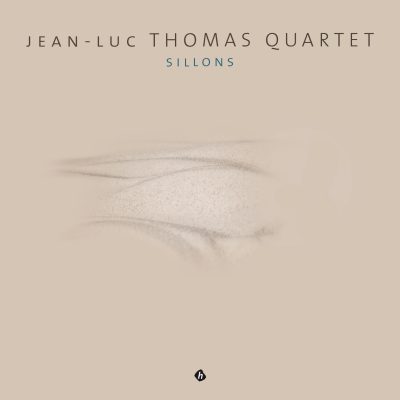
Jean-Luc Thomas Quartet presents “Sillons”

Jean-Luc Thomas Quartet will unveil ‘Sillons’, Jean-Luc Thomas's 11th album released under his own name by Hirustica, on its release date of 8 May 2026 (digital and CD) by Hirustica / InOuïe Distribution. The single ‘Takamba Yacouba’ has been available since 6 March 2026 on all platforms. After 25 years of experimentation, encounters and travels, flutist and composer Jean-Luc Thomas wanted to create a group in his own name, the Jean-Luc Thomas Quartet. For this new musical adventure, he has surrounded himself with musicians from the national scene, coming from jazz, traditional music and even early music. Together, they share a taste for melody, rhythm and improvisation, but also an openness to each other and to the cultures of the world. Following this creation and a series of concerts, Jean-Luc Thomas wanted to produce an album entitled ‘Sillons’. This album is intended to be both a musical travel journal and a vibrant tribute to all the masters he has encountered along the way: from the warmth of festoù-noz and pubs nourished by oral tradition to the popular music of Niger, Brazil and India. Cast: Jean-Luc Thomas (flutes, composition and arrangements) Simon Le Doaré (double bass, arrangements and orchestration) Timothée Le Net (diatonic accordion and arrangements) Hugo Pottin (drums and arrangements) Guest artists: Catherine Delaunay (clarinets); Marie-Suzanne de Loye (viola da gamba); Line Willerval (gadulka). It can be learned, taught and theorised, but music will never completely break away from its roots. We must always be more open to the world and those who inhabit it. No one understands this requirement better than Jean-Luc Thomas, now one of France's greatest flute players in the field of traditional and improvised music. Originally from Trégor, his musical horizons continue to expand as he travels the world. Jean-Luc Thomas collaborates with musicians and singers from Brittany, Mali, Poland, Brazil, India and the Arab world, including traditional, classical and jazz musicians (Carlos Malta, Michel Godard, Yacouba Moumouni, Vitor Lopes, Ravichandra Kulur, etc.), and joined the Théâtre Équestre Zingaro (‘Ex-Anima’) for three years. A tireless explorer of the world and its traditions, he has never compromised his artistic integrity for commercial gain. In all his attempts to unite different musical styles, Jean-Luc Thomas has never been satisfied with formulas, tricks or shortcuts. For him, human dignity is not something to be traded: ‘We receive such great things...,’ he marvels. ‘My flute has opened the doors of the world to me.’ And it is a whole world that his flute invites us to discover in return. Adapted from the biography written by Louis-Julien Nicolaou (Les Inrocks – Télérama)
27 March 2026

Mansfarroll presents “África sí”

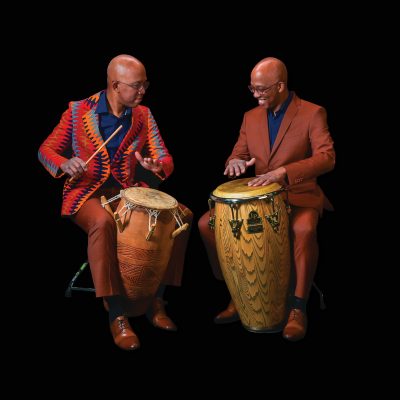
Mansfarroll, a Cuban composer and percussionist based in France since 2002, will release his third album, África sí, on 10/04/2026 on CD and digitally via M. Percuson / InOuïe Distribution. "África sí", the first single from this new opus, is already available on all platforms! There is a link between Afro and Cuban music. In geography, it is the Atlantic; in this album, it is the composer and percussionist Mansfarroll who plays this role. African captives deported to the Americas introduced their music there. The Caribbean island quickly ‘Cubanised’ it. Since then, as people have crossed the Atlantic, exchanges have continued, from east to west and west to east. Mansfarroll helps us rediscover the deep ties that unite the African continent with the Caribbean island, Congolese rumbas with Cuban rumbas, Ghanaian high-life with tumba francesa, jazz with the whirlwind of Afro-Cuban rhythms... On this album, Mansfarroll (compositions and arrangements, percussion, backing vocals) is accompanied by leading artists from the Afro-jazz scene: Yaroldy Abreu Robles: percussion, vocals (tracks 1-10) Ballaké Sissoko: kora (tracks 3, 7) Pierre Marcault: djembe, bougarabou (tracks 2, 8, 9) Patrick Bebey: pygmy flute and kalimba (tracks 6, 7) Jorge Vistel Serrano: trumpet (tracks 1, 2, 4, 5, 6, 9) Irving Acao Sierra: tenor saxophone, soprano saxophone and flute (tracks 1, 2, 4, 6, 10) Julien Chirol: trombone (tracks 1, 2, 4, 6, 9) Aude Publes Garcia: vocals and backing vocals (tracks 1, 2, 3, 4, 5, 8, 10) Monika Kabasele: vocals and backing vocals (tracks 1, 2, 3, 4, 5, 8) José Ramón Cabrera Montes de OcaJ: piano-Fender Rhodes (tracks 1, 2, 4, 5, 6, 8, 9, 10) Felipe Cabrera Cardenas: double bass (tracks 1, 2, 8, 9, 10) Gino Chantoiseau: bass guitar (tracks 4, 5, 6) Abdoulaye Kouyaté: electric guitar (tracks 1, 4, 6) Daniel Garlitsky: violin (tracks 2, 10) Jérémie Visseaux: violin (tracks 2, 10) Nina Tonji: viola (tracks 2, 10) Mimi Sunnerstam: cello (tracks 2, 10). Mansfarroll biography: In Cuba, he toured with Maraca y Otra vison and the group Síntesis las Hermanas Faez y la Casa de la Trova. Based in France, he collaborated with musicians and groups such as Chucho Valdés, Ibrahim Maalouf, Ernesto 'Tito " Puentes, David Murray, Patrice Caratini, Julien Lourau, Camille Bertault; major international artists such as Rosalia, Angélique Kidjo, Las Maravillas de Mali with Mory Kanté; French pop artists such as Charles Aznavour, Michel Fugain, Clara Luciani, and many others. He played at the opening of the Paris 2024 Olympic Games (Lady Gaga), the opening of the Paralympic Games with Christine and the Queens, and the Parade of Champions with Philippe Katherine, Christine and the Queens, Cerrone, and Amadou and Mariam. He has released two CDs, Utop!a Guantanamera, nominated for the Cubadisco award, and Dizzy El Afrocubano, a tribute to the centenary of Dizzy Gillespie's birth.
20 March 2026


Simon Bolzinger and Zumbao present “Chachacha contra la guerra”

Sorry, this entry is only available in FR.Le groupe Zumbao, sous la direction du pianiste, compositeur et arrangeur SimonBolzinger révèlera le 13 mars 2026 chez Picante / Socadisc "Chachacha contra la guerra", un single engagé et vibrant d'actualité, en hommage à Rafael Quintero (décédé en 2024) chanteur et compositeur du groupe. Le single "Chachacha contra la guerra" sera disponible sur toutes les plateformes, et aussi en clip à la même date. Cette chanson est écrite par Rafael Quintero, poète et chanteur vénézuélien installé à Marseille, au début des années 2000, en protestation aux nouvelles guerres fomentées par les États Unis dans le monde, et notamment en Irak. Rafael Quintero est alors le chanteur et le compositeur du groupe Zumbao, basé à Marseille et dirigé par Simon Bolzinger. La musique est co-écrite entre Quintero et Bolzinger, et le groupe interprète le titre à l'occasion de nombreux concerts, comme en particulier la Fête de l'Humanité à Paris en septembre 2001. Comme le font tous les soneros, Rafael Quintero réinvente les paroles des couplets à chaque interprétation. Au fil du temps la chanson se dirige plus généralement contre les fabricants d'armes qui s'enrichissent grâce à la guerre. Le groupe Zumbao sera réuni à Marseille le 26 mars 2026 pour rendre hommage à Rafael Quintero, et à son œuvre. Il réinterprétera à cette occasion le « Chachacha contra la guerra ». Le groupe Zumbao est constitué de musiciens de renom de la scène Latin Jazz : - Simon Bolzinger (piano, direction) - Martin Fuenmayor (voix lead ) - Gilles Grivolla (saxophone) - Alain Henriot (trompette) - Isabel de la Roca (trombone) - Carlos Sanoja (basse) - Edwin Sanz (timbales, congas, percussion mineure ) - Cédric Léonardi (batterie) Historique de "Chachacha contra la guerra" : Cette chanson est écrite par Rafael Quintero, poète et chanteur vénézuélien installé à Marseille, au début des années 2000, en protestation aux nouvelles guerres fomentées par les États Unis dans le monde, et notamment en Irak. ese el coloso del norte que en su colmillo estridente siempre tiene aqui clavado en los paises independientes le dieron palo en Vietnam saben a quien me refiero le daran palos en el Irak palo palo con palo Rafael Quintero est alors le chanteur et le compositeur du groupe Zumbao, basé à Marseille et dirigé par Simon Bolzinger. La musique est co-écrite entre Quintero et Bolzinger, et le groupe interprète le titre à l'occasion de nombreux concerts, comme en particulier la Fête de l'Humanité à Paris en septembre 2001. Comme le font tous les soneros, Rafael Quintero réinvente les paroles des couplets à chaque interprétation. Au fil du temps, la chanson se dirige plus généralement contre les fabricants d'armes qui s'enrichissent grâce à la guerre. quienes fabrican las armas tambien van a fabricar la manera de venderlas guerras van a fomentar los gringos tienen un master ese es gran interes canones rifles misiles a todos quieren vender En 2006, Zumbao joue en ouverture de la Feria de Cali en Colombie, capitale mondiale de la salsa. Afin de gagner à sa cause le public colombien, Rafael Quintero dénonce une nouvelle fois l'impérialisme états-unien, et sa tentative de provoquer une guerre entre le Venezuela et la Colombie, tentative qui sera par la suite vouée à l'échec. me aseguro que yo nunca lo podria pensar que un pais tan hermoso no consigua el camino hacia la paz Le groupe Zumbao se disloque après la Feria de Cali et la chanson n'est pas enregistrée. Quintero tombe malade en 2022 et quitte la France pour le Venezuela. Bolzinger lui propose d'enregistrer ses chansons inédites, dont le « Chachacha contra la guerra ». Les nouvelles paroles destinées à l'enregistrement s'adapteront à l'actualité, toujours dominée par les guerres financées par les États-Unis, en particulier à Gaza et en Ukraine. Genocidio en Palestina La ONU guarda silencio Aunque hay un repudio inmenso Contra Israel que asesina La production est lancée en 2024 et durera un an et demi, avec des enregistrements réalisés à distance de manière à regrouper les anciens membres du groupe Zumbao : Marseille, Paris, Genève, Mexico, Cali et Caracas apporteront leurs pierres à l'édifice. L'état de santé de Quintero s'étant dégradé, il ne pourra pas enregistrer la chanson et décède en décembre 2024. Bolzinger fait appel au chanteur vénézuélien Martin Fuenmayor pour la partie salsa, mais ne trouve pas de nouvel interprète pour la partie rap prévue par Quintero : La OTAN es instigador De ataques y destrucción Pasó de defensa a ataque De cuidar a amenazar Quiero tu petróleo Te hago la guerra No me gusta tu gobierno Te hago la guerra Viene aumentando tu industria Te hago la guerra Afin de permettre la sortie du single à temps avant le concert d'hommage à Rafael Quintero, organisé par Radio Galère à Marseille le 26 mars 2026, Bolzinger décide de remplacer le rap initialement prévu avec Quintero par un remix du discours pour la paix prononcé par Nicolas Maduro, président du Venezuela le 17 novembre 2025, qui fait le buzz et est déjà remixé par l'influenceur dominicain Hey Santana. Le 3 janvier 2026, le pouvoir change de main au Venezuela. La production du master est terminée quelques jours plus tard et le clip vidéo dans les semaines qui suivent, en puisant des images dans les chaînes d'information sur YouTube. Le single « Chachacha contra la guerra » sortira le 13 mars 2026, distribué par Inouïe Distribution. Le groupe Zumbao sera réuni à Marseille le 26 mars 2026 pour rendre hommage à Rafael Quintero, et à son œuvre. Il réinterprétera à cette occasion le « Chachacha contra la guerra». Par la suite sera lancé un appel à contributions à tous les artistes chanteurs.ses et rappeurs.euses souhaitant enregistrer à leur tour de nouveaux couplets de la chanson, afin que perdure la protestation mondiale contre ceux qui financent les guerres et s'enrichissent grâce à l'oppression des peuples.
11 March 2026

CAMiNOS presents its eponymous EP

The CAMiNOS group, led by composer and guitarist Germain Chaperon, will release its new eponymous EP on 24/04/2026, on Piment Rouge Production / ACEL WORLD WIDE / InOuïe Distribution. This opus will be presented on Thursday, 04/06/2026, on stage at Le Triton (Les Lilas) during an exceptional launch concert. The 1st single, “Lila,” will be available on all platforms starting 06/03/2026! CAMiNOS, the paths we follow, cross, and create... This idea of a journey, a path, both in life and in music, is at the heart of the project. Based on original compositions by Germain Chaperon, CAMiNOS highlights the worlds that each musician has gleaned along their journey for this meeting at the crossroads, the encounters we can have there, and the way we build ourselves with them. This naturally creates a bridge between cultures, where we realize that through all these paths of life, these stages, these accidents, which make us who we are at a given moment, a profound humanity brings us together. It is this encounter and this connection that the project highlights, for a musical journey beyond borders, whether physical or cultural. Based in Marseille, CAMiNOS offers a resolutely Mediterranean repertoire, with songs in Occitan, Spanish, and Italian, punctuating a traveling musical universe that evokes the cultures that inspire us: India, Eastern Europe, North Africa, and of course Spanish flamenco and its South American resonances, in a style that draws on jazz and contemporary music. The group CAMiNOS is composed of Germain Chaperon (compositions, guitar); Neda Cainero (vocals); Marek Eichler (bass); and Sven Clerx (drums). “El encuentro que se cruza en tu camino, El camino, el que marca tu destino.” The encounter that crosses your path, the path that marks your destiny. DISTRIBUTION: This project is based on the guitar compositions of Germain Chaperon. Influenced by a wide range of styles from India to South America, Eastern Europe, and Africa, his playing includes a strong flamenco touch, where, in his opinion, the guitar finds its most beautiful expression. Neda Cainero's vocals perfectly illustrate CAMiNOS' message. Her repertoire travels across Europe, Latin America, and Africa, from chanson to jazz, cumbia to reggae, and even tarantella. Styles and soundscapes intersect and blend in her musical offerings. On bass, Marek Eichler comes from the Czech and Dutch jazz rock scene. His arrival in France marked his encounter with Gnawa music from the Maghreb and flamenco, and he brings his virtuosity and musicality to the project. On drums, Sven Clerx, who, after graduating from conservatory, devoted himself to the stage in both experimental jazz and live performance, offers great technical skill and beautiful energy.
6 March 2026

Stelios Petrakis presents “Lyric”

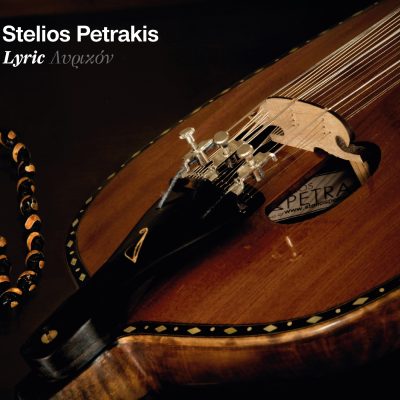
Greek composer and luthier Stelios Petrakis will unveil “Lyric,” his 10th album, on February 13, 2026, on Buda Musique/Socadisc. "Music is a union. It is the union of the creator with his inner world, his experience, his vision, and his fellow musicians; of the work and the creator with the audience; and of the listeners among themselves. As in any union, someone has to take the first step. With the help of guest musicians, old and new friends whom I admire and with whom I am happy and grateful to be reunited, I attempt to interpret on the lyre pieces that are seemingly unrelated, pieces from near and far, pieces that are familiar but also “foreign” to knowledgeable listeners, yet which seem to be united by a common and profound bond. A friendly listener whom I did not know once said something to me that I consider to be the greatest compliment I have ever received for my music. He said to me: “Thank you for opening doors to the unknown for me.” So it is precisely these doors that I am trying to open again, and if I have succeeded in opening them even a little, that is enough for me. I hope to see you at my concerts so that we can share beautiful music together once again. Enjoy listening!" Stelios Petrakis On this new album, Stelios Petrakis (lyre, lute) is accompanied by talented musicians: Giorgis Xylouris: vocals; Bijan Chemirani: zarb, daff, bendir, karbas, broom; Sylvain Barou: Uilleann pipes, Armenian zurna, kaval, tulum, kanbazurna, flute; Maëlle Duchemin: harp; Pavlos Spyropoulos: double bass; Sakir Ozan Uygan: daouli; Michalis Kontaxakis: mandolin; Mattia Manco Gregoriadis: accordion; Samuel Mele: guitar; Antonis Voumvoulakis: guitar; Efrén López: mandolin, cuatro, davul   Biography Stelios Petrakis: Composer and instrument maker, Stelios Petrakis was introduced to the art of the lyre at a very young age. He had many influential teachers during seminars and regular classes, masters of Eastern music such as Ross Daly, Talip Ozkan, Dr. L. Subramaniam, and many others. He has collaborated extensively in concerts and recordings with leading musicians on the international scene (Ross Daly, Chemiranis, Efren Lopez, etc.), with our traditional Cretan musicians (Giorgis Xylouris, Vassilis Stavrakakis), with Greek and international composers (Christos Leontis, Stamatis Spanoudakis, Stephanie Economou, Joseph Shirley) as well as with other musicians in recordings for films, albums, and concerts. Today, he is one of the leading representatives and innovators of traditional music, with nine solo albums and numerous international awards to his credit. With his quartet, he takes Cretan music around the world, from India and Malaysia to the Théâtre de La Ville in Paris and Carnegie Hall in New York, and almost everywhere else, opening it up to an ever-wider audience. The highlights of his musical career include reaching the top of the World Music Charts Europe (July 2022) for the CD “Spondi,” the announcement of the CD “L'Art de la Lyra” as the best of 2016 on Radio France, as well as his sold-out concerts at the Théâtre de la Ville (Paris) and Carnegie Hall (New York). In cinema, he has contributed extensively to the recordings for Nia Vardalos' film "My Big Fat Greek Wedding vol. 3“ by Nia Vardalos with music by Stephanie Economou, the recordings for the film ”Killer Heat“ by Philippe Lacôte with music by Joseph Shirley, while the documentary ”Thalatta" by the University of Thessaloniki, which deals with overfishing in the Aegean Sea, was entirely invested with his own music. As a luthier, he has his own workshop in Crete, where he makes lyres, lutes, baglamas, and other stringed instruments. His own creations are exhibited in musical instrument museums around the world, such as the Cité de la Musique in Paris, Japan, France, Poland, and Greece. Famous musicians from around the world play his instruments, such as Ross Daly, Efren Lopez, Kelly Thoma, Les Claypool, Sean Lennon, and Giorgis Xylouris. He is a graduate of the University of Athens Law School and speaks English, French, and Turkish.
20 February 2026

LEÏ presents “Amarre”

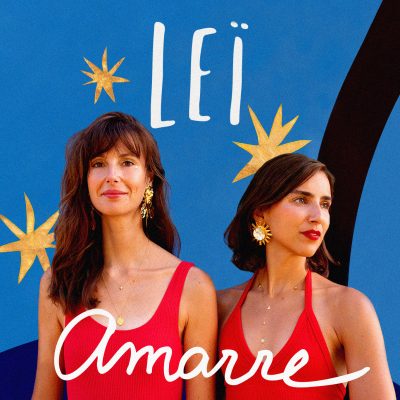
The female vocal duo LEÏ, composed of Laurène Barnel and Carine Habauzit, will unveil their new album ‘Amarre’, which will be released on 13/02/2026 by Inouïes / InOuïe Distribution. The album will be presented on Thursday 12 March 2026 at 8.30pm on stage at Le Consulat (Paris, 11th arrondissement) during an exceptional launch concert. The first single, ‘Lo hadi aingürüa’, is available on all platforms since 30 January 2026! Amarre is the song of free women who tenderly rock their children and their dreams. LEÏ's two voices weave together music borrowed from the oral traditions of the Mediterranean. Through this repertoire, LEÏ sings to nurture, in an intimate universe that is both gentle and incandescent. The duo will be touring France to present this new album: - 14/02/2026 - RELEASE PARTY at the Church of Champaubert (51) - 21/02/2026 - RELEASE PARTY at La Crypte, Lagorce (07) - 12/03/2026 - RELEASE PARTY at the Consulat, Paris (75) - 21/04/2026 - Théâtre de Privas (07) - 23/05/2026 - Museum Night - quartet concert - Vieille Charité (13) - 01/08/2026 - Église de Laboule (07) Biographies Laurène Barnel A 2018 graduate of the Beaux-Arts in Paris, Laurène Barnel is a multidisciplinary artist. Since 2023, she has been developing her practice of oriental singing with Dorsaf Hamdani at the International Institute of World Music. Laurène is also training in other vocal traditions, such as Anatolian singing with Eléonore Fourniau, Iberian percussion with Grégory Duveau, and Corsican polyphony with Jean Philippe De Peretti. She is also the choir director and arranger for the semi- professional group AMANEOS, which she co-founded in 2018. In the field of visual arts, her approach revolves around collective creation, cartography and the poeticisation of everyday life, mainly through video and photography. In 2022, she obtained a diploma as an Artist Intervening in Schools (AIMS), sealing her commitment to passing on art. Carine Habauzit Since 2019, Carine has been training in various singing traditions: Occitan polyphonic singing with Beatriz Lalanne, Corsican polyphonic singing with Muriel Chiaramonti, Mediterranean and Andalusian songs and bendir playing with Catherine Braslavsky and Joseph Rowe, and Iberian songs and percussion with Grégory Duveau. She is also interested in traditional Mongolian singing with Johanni Curtet and is learning Kurdish daf with Shadi Fathi. She is studying Greek and Asia Minor singing with Maria Simoglou. From her experiences in yoga and meditation, she has retained an approach to the body, breath and presence in her musical practice (training in yin yoga ‘of sound’ with Romulo Pelliza), as well as an interest in improvisation. Her initial training in contemporary art (ENSBA Lyon) and cinema fuels her desire to combine tradition and innovation. In 2020, she joined the semi-professional ensemble AMANEOS as an arranger/choir director.
6 February 2026

Cesária Évora Orchestra continues its tour in France

Sorry, this entry is only available in FR.Après le succès de sa tournée en France en 2025 (La Marbrerie, Musiques Métisses, Africolor...), le Cesária Évora Orchestra poursuit sa route à la rencontre de son public pour célébrer Cesária Évora, en réunissant sur scène la crème des musiciens capverdiens et quelques-unes des plus grandes voix actuelles : Elida Almeida, Lucibela, Téofilo Chantre et Ceuzany. Voici les premières dates de la tournée à venir en France et en Europe pour 2026 (d'autres seront annoncées prochainement ) : 18/03/2026 : Le Colisée, Lens (62) 19/03/2026 : Rocher de Palmer, Cenon (33) 20/03/2026 : festival Détours de Babel, L’Heure Bleue, Saint-Martin d’Hères (38) 21/03/2026 : L’Arsenal, Metz (57) 12/06/2026 : Les Nuits de Fourvières, Lyon (69) // invitée : Mayra Andrade 13/06/2026 : Barbican, Londres (UK) // invitée : Mayra Andrade 17/07/2026 : Verbier Festival, Vevey (CH) La formation actuelle est composée de la crème des artistes de la scène cap-verdienne d'aujourd'hui : Ceuzany, Elida Almeida, Lucibela et Teofilo Chantre. La disparition soudaine de Cesária Évora le 17 décembre 2011 suscita une grande émotion parmi ses fans qui se réunirent par milliers, en 2012, pour honorer sa mémoire lors de concerts mémorables, notamment à Toulouse, Lisbonne, Amsterdam et Paris. Autour des musiciens qui accompagnaient habituellement la chanteuse, les plus grandes voix des musiques du monde sont venus rendre un ultime hommage à celle que l’on surnommait La Diva aux pieds nus – parmi elles Bonga, Angélique Kidjo, Lura, Ismaël Lô, Mayra Andrade, Bernard Lavilliers, Tito Paris pour n’en citer que quelques-unes. Après ces grandes messes, les musiciens n’ont eu qu’une envie : continuer à faire vivre le répertoire de Cesaria qui avait enchanté le public sur les scènes du monde entier. C’est ainsi qu’ils se réunirent sous le nom de Cesária Évora Orchestra pour un premier concert, en 2014 au Kriol Jazz Festival à Praia (Cap-Vert), en hommage à l’icône des musiques du monde et à son action, notamment en tant qu’Ambassadrice de la musique cap- verdienne. Depuis cette date, le Cesária Évora Orchestra se produit régulièrement dans le monde pour célébrer Cesária Évora.
23 January 2026

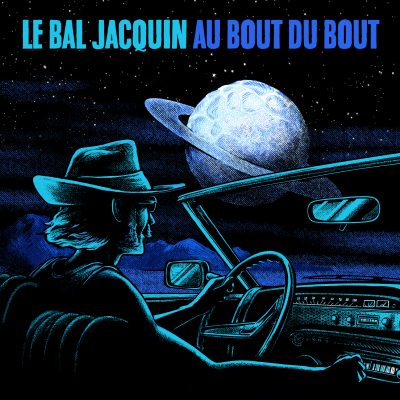
Le Bal Jacquin presents “Au bout du bout”

Le Bal Jacquin, the ‘bal du monde’ quartet led by accordionist, composer and rhythm explorer Éric Allard-Jacquin, will unveil its new album ‘Au bout du bout’, due for release on 20/03/2026 on A tout va / Modulor Records Paris. This opus will be presented on Thursday 9 April 2026 on stage at La Petite Halle (Paris, 19th arrondissement) during an exceptional launch concert. The album's first single, featuring Bazbaz, is already available on all platforms. "Au bout du bout thus presents itself as a disc of resistance. Against the abandonment of the accordion to old fashioned types like Chance aux chansons, against the gangrene of identity, against withdrawal into oneself and the ad nauseam rumination on one's own sorrows and pains, these ten compositions affirm the transcendent powers of imagination, experience, sharing and attention to the world. Of course, a few demons still linger, as do flashes of melancholy. But dance puts things back in their place, with the heart beating at the centre and everything that threatens to stop it at the periphery. At the end of the day, for Bal Jacquin, the future is bright." Louis-Julien Nicolaou Alongside Éric Allard-Jacquin (accordion) are three musicians with unique backgrounds: Matthis Pascaud (guitar) François Lapeyssonnie (bass) Arthur Alard (drums) Two talented guests complete the quartet: Bazbaz (vocals) on the track ‘Au bout du bout’ (track 2) Oriane Lacaille (vocals, percussion) on the track ‘Fanm tambour’ (track 4) Le Bal Jacquin is an invitation to dance, to listen, to explore different styles and soundscapes. Created by accordionist, composer and rhythm explorer Éric Allard-Jacquin, the group brings together four musicians from rich and contrasting backgrounds, united by a common desire: to create a contemporary dance party that is curious, open and without boundaries. Le Bal Jacquin is neither a bal musette nor a bal folk. It is a free ball. It borrows from traditional forms what is most alive in them: their ability to bring people together, to move them, to make them dance – while reinventing them with a contemporary musical language. At a crossroads, the group fully embraces its influences: the woody, brassy trances of Baobab Orchestra, the musical tales of Ry Cooder, and the joyful inventiveness of André Minvielle, capable of making words swing as well as bodies. Éric Allard-Jacquin's compositions navigate between song, instrumental trance, swaying rhythms and poetic flights of fancy. Vocals are rare, but never absent: they emerge, spoken or sung, often in dialogue with the accordion. You can hear echoes of the Mediterranean, West Africa, the bayous of the southern United States, and even the popular dances of Central Europe. After several concerts in France, Le Bal Jacquin is preparing to release its first album, ‘Au bout du bout’, the result of demanding and generous creative work. The album, recorded in the studio, will feature several renowned guests, including Camille Bazbaz and Oriane Lacaille, two artists whose uniqueness and timbre enrich the group's sound palette. More than just a musical project, Le Bal Jacquin is a way of conceiving the collective: lively music in constant dialogue with the audience, with the world, with dance. A ball where nothing is reproduced, but where everything is invented in the moment.
16 January 2026

Jocelyn Mienniel presents “Jocelyn Mienniel & les instruments migrateurs”

Flutist, composer and sound designer Jocelyn Mienniel will unveil ‘Jocelyn Mienniel & Les Instruments Migrateurs’, his sixth album (digital and CD), on 16 January 2026, released on Buda Musique / Socadisc. “Because the musical cultures of the five continents are migratory birds that tell the story of humanity's past, present and future. Because the art of the flute, like the singing voice, is a vibrant and enduring testimony to the multiculturalism that surrounds us.” At the origin of this project is the urgent need to break down the physical and psychological walls that are being erected all over the planet and, more insidiously, in our minds. These migratory instruments could not be better named. Whether they appear in China, Persia or West Africa, they carry with them the richness of humanity. Like fairy tales, they have adorned themselves with the languages and customs they have encountered to offer us these intense experiences of discovering an Elsewhere that is so far away and yet so close, of an Other that is so different and yet so similar. To make a strong impact, Jocelyn Mienniel came up with a simple idea. Taking advantage of a two-season residency at the Comptoir/ Halle Roublot, he decided to bring together extraordinary artists from five continents to engage in cross-border dialogues. They meet on stage from 3 to 7pm and experiment together with a framework provided in advance by each of the protagonists. They would perform it that same evening and share the fruits of their fleeting encounter in a free improvisation. It is a joy to share once again a moment from these thirteen unforgettable concerts. With his unique way of combining wind and percussion, Jocelyn Mienniel makes the flute a resolutely modern instrument. Renowned for his inventive playing and his unique and instantly recognisable sound, he ceaselessly explores the expressive limits of the flute through a poetic, dreamlike and rich world, mixing virtuosity, improvisation and electro-acoustic textures. He is a milestone in the history of an instrument that is over 50,000 years old. The very broad spectrum of his influences and activities makes this musician a truly extraordinary cross- disciplinary artist, constantly expanding his territory of performance and inspiration by collaborating with artists from all over the world.
9 January 2026