All our news

Kaabi Kouyaté presents “Tribute to Kandia”

Kaabi Kouyaté will unveil his new album, “Tribute to Kandia,” upon its release on June 27, 2025, on Buda Musique / Socadisc. Sory Kandia Kouyaté (1933-1977) was “The Voice” of independent Guinea. A descendant of Balla Fasséké Kouyaté, the illustrious djeli (custodian of a people’s oral tradition) of Soundiata Keïta, founder of the Mandingo Empire, he was introduced to music (in particular the ngoni) and the complex Mandingo genealogy by his learned father. His gifts astonished the royal court of Mamou, which he joined at a very early age. “ It is to this baobab of Guinean song that one of his sons, Kabiné Kandia Kouyaté, aka Kaabi, dedicates this tribute. The project was prompted by director Laurent Chevallier, who made “La Trace de Kandia”, a film that won an award from the Académie Charles Cros in 2015, in which Kaabi returned to Guinea in his father’s footsteps to discover the places and witnesses of his legend. Through its choice of repertoire, this tribute recounts the mental geography of Sory Kandia Kouyaté and his place in the Mandinka griot tradition of epic song. Contemporary heritage: this was the goal set for himself by Sory Kandia Kouyaté. Kaabi worked in the same spirit, admitting that he needed time to understand the scope of such a legacy. On the strength of this background, he has surrounded himself with a dedicated team: loyalists such as Badje Tounkara (ngoni), Ballaké Sissoko (kora) and Lansine Kouyaté (balafon), as well as guests who know that Mandinka music can only be approached with tact and humility: guests such as Jean-Philippe Rykiel, well known to African musicians and whose piano has taken up residence in the savannah. The presence of singer Aminata Camara, who was his father's backing vocalist, symbolises a passing of the torch. Yet the most fascinating thing about this album is Kaabi's voice, whose timbre, modulations and inflections, and the felicity of his DNA, echo so hauntingly those of Guinea's most famous griot. From Frank Tenaille (translation: Roger Surridge)
24 June 2025

Le Vent du Nord on tour in France this summer

Sorry, this entry is only available in FR. For the sake of viewer convenience, the content is shown below in the alternative language. You may click the link to switch the active language.Le Vent du Nord, quintette québécois folk / trad de renommée internationale, finalisera sa tournée spéciale 20e anniversaire en présentant son 11e album "20 Printemps" lors de pas moins de quatre concerts en France cet été, dont deux projets spéciaux, avant d'annoncer la sortie de "Voisinage" son 12e album début 2026. Voici toutes les dates de la tournée française : - 06/08 : Le Vent du Nord Symphonique avec l’Orchestre Nationale de Bretagne, Festival Inter-celtique, Lorient (56) - 08-09/08 : Festival du Chant de Marin, Paimpol (22) - 10/08 : Les Voix du Vent avec cordes (collaboration Ensemble Magnetis), Les Traversées de Tatihou, Saint-Lô (50) Le Vent du Nord est composé de : - Simon Beaudry : voix, bouzouki et guitare - Nicolas Boulerice : voix, piano, vielle à roue et clochettes - André Brunet : violon, pieds et voix - Réjean Brunet : basse, accordéon diatonique, piano, bombarde et voix - Olivier Demers : violon, pieds, mandoline, guitare, tom basse, grosse caisse et voix Non seulement considéré comme un ambassadeur francophone incomparable, Le Vent du Nord est un moteur du mouvement folk progressif québécois, ainsi qu’un groupe phare dans le mouvement de renaissance de la musique traditionnelle du Québec. Depuis sa fondation en 2002, il a connu une ascension fulgurante qui ne cesse d’étonner ! Ses qualités d’interprète, d’arrangeur et de compositeur, tout autant que sa très forte présence scénique empreinte d’une profonde générosité, sont dorénavant reconnues à l’échelle mondiale. Le groupe a présenté plus de 2000 concerts sur quatre continents, a fait paraître 11 albums et été récipiendaire de nombreux prix prestigieux dont un Grand prix du disque Charles Cros (France), deux prix Juno (Canada), deux Prix de Musique Folk Canadienne et un Félix à l’ADISQ (Québec). Il a été nommé Artiste de l’année lors de la Conférence annuelle internationale North American Folk Alliance (2006) et il a été le premier récipiendaire du Prix Pont Transatlantique (2015) conjointement décerné par les organisations internationales BabelMed (France) et Mundial Montréal (Québec). En 2019, il a eu l’honneur de recevoir le Grand Prix Desjardins - Musique décerné par Culture Lanaudière et le Prix Edith Butler décerné par la Société des professionnels auteurs-compositeurs québécois (SPACQ). La formation a performé lors de grands festivals notamment Celtic Connections, WOMAD Chile, WOMADelaid, WOMAD New Zealand, lors du Grand spectacle télévisé de la Fête nationale à Montréal en 2018 ainsi que lors du Grand Spectacle télévisé de la Fête nationale qui a attiré 75 000 personnes sur les Plaines à Québec en juin 2019. Enfin Le Vent du Nord s'est vu décerné le Songlines Music Awards en 2023 pour son album "20 Printemps".
24 June 2025

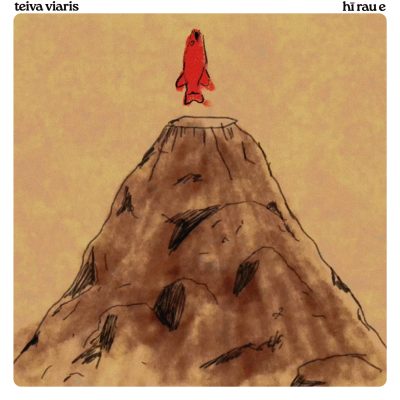
Teiva Viaris presents “Hi Rau E”

Award-winning Polynesian composer and multi-instrumentalist Teiva Viaris has just revealed his new single "Hī Rau E" on 04 June 2025 via ThirdFish Music / Distrokid. "Hī Rau E" is a gentle, hypnotic melody with folk overtones, composed and sung entirely in Tahitian, the artist's mother tongue. The single and clip clip are already available on all platforms. "Hī Rau E'' is a work that combines the traditional Polynesian culture of its composer with the Western indie folk that shaped his adolescence. The track tackles the theme of the ocean, the cradle of Polynesian civilisation, in a ritualistic, hypnotic tone. The raw sounds of the guitar and acoustic drums, combined with the guttural character of the Tahitian language, mingle with the softness of the backing vocals and layers of synthesiser in a growing swirl of repetitive melodic motifs. Teiva Viaris is a Polynesian composer and multi-instrumentalist born in Tahiti on March 11, 1987. Passionate about the world of sound from a young age, he first learned to play the piano at Mr. Fouché's music school in Pointe des Pêcheurs until the age of 12, then continued his training as an instrumentalist on the guitar, teaching himself. He then became involved in numerous musical groups of various genres, first in Polynesia, then in mainland France, while studying business and undergoing professional training in music in Lille from 2006 to 2012. Upon his return to Polynesia, he joined the public education system as a music teacher at Henri Hiro College in Faa'a and set up his own composition and sound design company, ThirdFish Music, in his native town of Punaauia, putting his experience as a composer to good use in commercials, films, and documentaries produced locally and internationally. In 2018, he and his partner Poerani Germain founded the dance group Ia Ora Te Hura, with which he won the awards for best melodic composition at Hura Tapairu 2018 and best composer at Heiva i Tahiti 2022.
24 June 2025

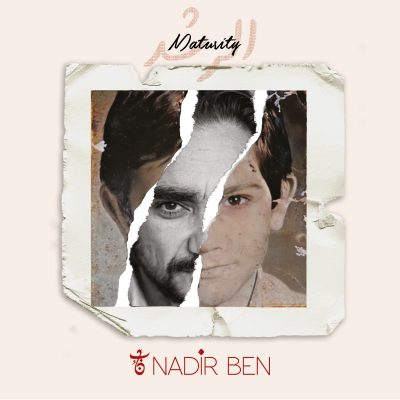
Nadir Ben presents “Maturity”

Nadir Ben will unveil “Maturity”, his new album, on its release, September 05, 2025, on Joussour / InOuïe Distribution. This opus will be presented on Wednesday, October 8, 2025, on the stage of Les 2 Pianos (Paris) during an exceptional launch concert. The single ‘Majrouh’, a new single from the album, will be available on all platforms on June 13, 2025. In the meantime, check out ‘Baghi ntoub’, his previous single, already available on all platforms. ‘Maturity’, translated as "Al Rosh" in Arabic, is Nadir Ben's debut album. Nine tracks in a Maghreb Folk Pop style, where his voice captivates and he reveals himself with authenticity, addressing themes of belonging, commitment, identity, and heritage with sensitivity and poetry, as wink to the Arab-Andalusian tradition, with intuitive lyrics, all sung in Arabic. Nadir Benmansour is a French-Algerian singer-songwriter who draws his inspiration from both shores of the Mediterranean. He lived in the heritage of Andalusian music, lulled by the warm songs of Oran's Raï, and the rhythms of the Gnawas desert people. In the projects he leads, accompanied by renowned artists and musicians with whom he performs, Nadir harmoniously drives his artistic direction from Andalusian Arabic to a contemporary folk pop. It is from Oran, his hometown, that Nadir draws inspiration and tenderly sings of the romanticism and poetry of North African life, responding to the turmoil that has punctuated the history of the southern shore of the Mediterranean, while relating the bitterness of his exile. Since his early childhood in Tlemcen, during which he was introduced early to Andalusian music, Nadir has traveled through styles: from the acidity of folk guitar, through the trance groove of Saharan music, all while giving this Hispano-Maghrebi cachet which characterizes the essence of his influences. Line-up for the album: Nadir Ben: compositions, arrangements, lyrics, vocals ; Billel Mehsen: arrangements, guitar, percussion ; Hichem Takaoute: bass (tracks 4, 6, 7, 8, 9) ; Maamoune Dehane: drums (tracks 4, 7, 8, 9) ; Mohamed Miassi: arrangements, guitar (tracks 4, 7, 8, 9) ; Fouad Didi: violin (tracks 1, 2); Elhadi Elhassar: guitar (track 3); Tomi Matthieu: bass (track 3); Mehdi Drici: bass (track 3); Mirabelle Gilis: violin (track 4); Henri Schappert: saxophone (track 4); Amine Boukraa: gumbri (track 5); Farid Zebroune: mandola (track 5); Mehdi Askeur: accordion (track 8).
27 May 2025

Irene Amata presents “Sembianze”

Sorry, this entry is only available in FR. For the sake of viewer convenience, the content is shown below in the alternative language. You may click the link to switch the active language.Irene Amata révèlera "Sembianze", son nouvel album, à l'occasion de sa sortie le 05 septembre 2025 chez Prodastar / InOuïe Distribution. Cet opus sera présenté le lundi 29 septembre 2025 sur la scène du New Morning (Paris, 10e) lors d'un concert de lancement exceptionnel en quartet avec Fady Farah (piano), Maurizio Congiu (contrebasse) et JB Perraudin (batterie). ➡️ Le single "Confined", premier extrait de cet album, sera disponible le 02 mai 2025 sur toutes les plate-formes. ⬅️ " C’est l’histoire d’un nouveau départ et d’une affirmation de soi : Irene Amata, que l’on connaissait interprète d’un répertoire brésilien au sein du duo Sambuca (album Luz publié en 2020), se révèle leadeuse d’un quartet de jazz, compositrice, autrice. C’est l’histoire d’une mise à nu, aussi : en chantant dans sa langue maternelle, l’italien, Irene touche à l’intime et nous offre, d’une voix exempte de tout artifice, des chansons douces-amères qui sont autant de poèmes instinctifs. L’émotion au bord des lèvres et le cœur au bord des yeux, Irene a mûri pendant sept années l’écriture de Sembianze. D’abord chez elle à Paris devant son piano - Irene a une formation de pianiste classique - habitée par le plaisir ressenti lorsque les mélodies naissaient naturellement en italien. Ensuite sur scène, avec les musiciens parisiens qu’elle réunit autour d’elle et qui embrassent avec bonheur son univers musical. De la rigueur, de la constance, le goût du travail à la fois seule et en équipe : ce sont précisément les qualités qu’Irene a conservées de sa carrière de scientifique - entamée après son double doctorat en physique et biologie moléculaire - avant sa bascule dans la vie de musicienne professionnelle. Ses onze compositions originales aux couleurs douces-amères prennent vie en quartet acoustique, avec Fady Farah au piano, Maurizio Congiu à la contrebasse et JB Perraudin à la batterie. Soudé par l’expérience de la scène, le groupe a enregistré en trois jours, en novembre 2024, au Studio La Menuiserie à Noisy-le-Sec. Pour Irene, chanter dans sa langue maternelle relève de l’intime, d’une mise à nu. Un défi qui l’a amenée à repenser son jeu vocal. Si sa voix nous touche par son absence totale d’artifices, c’est qu’Irene a voulu se sentir « instrument parmi les instruments ». Offrir de la respiration à l’auditeur et beaucoup d’espace d’expression aux musiciens, constituait également un vrai choix : Fady Farah au piano se révèle comme la deuxième « voix » de l’album, sur des arrangements d’Irene qu’il a contribué à développer. " Alice Leclercq Line-up de l'album : - Irene Amata : composition, arrangement, auteure, voix - Fady Farah : piano - Maurizio Congiu : contrebasse - JB Perraudin : batterie
29 April 2025

Spontus present ‘’ Ar Lagad – Bleiz’’

Spontus will unveil “Ar Lagad - Bleiz”, their 9th album, on its release, June 27, 2025, on Klam Records / L’Autre Distribution. The quartet is composed of : Alan Paranthoën: Violin, vocals Thomas Hurtel: Bass, vocals Erwan Bérenguer: Guitar, vocals Youen Paranthoën: Accordion, vocals With their feet in the round and their heads in the stars, the ''plijadur'' has been moving between stage and floor for thirty years. With La Ridée du petit René and La Pourlet de la valise volée, the rural groove of Spontus gives pride of place to the communicative energy of the song. With a repertoire of 2 hrs 30 mins, the musicians draw on their thirty years' experience as dance leaders to offer a wide variety of dances from Lower and Upper Brittany, both sung and instrumental. ‘’ Recreating the energy of singing in dance and bringing it back to instrumental music, that’s where we were when we decided to put down our instruments to renew the repertoire. And then memory kicked in, we remembered the “bedjon” of a capella singing on the parquet floor at the end of the evening, we remembered the power of singing back ... We started listening again to our primary sources of inspiration, traditional singers. We soon started tapping our feet and singing in response, then picked up our instruments again. After a few months of rehearsals, the decision was made. We had to start singing. Lyrics sung by the old-timers to new music and new lyrics. This was the new direction we were going to take to entertain the dancers, and bring them into the dance. So we sing. We sing as we talk to people, we tell them beautiful stories in French or Breton, and we set our songs to instruments that illustrate, complete and feed the imagination. We escape, we fly away with this man who captures the colors of the world and finally succeeds in making the rainbow dance. We leave the world of humans to join the insects’ revolt to claim their freedom, and find out why Baltazar and Barbara dance without discord. ‘’ Spontus
23 April 2025

Cesaria Evora Orchestra on tour in France

Currently on tour in North America, the Cesaria Evora Orchestra will kick off its French tour with a concert at La Marbrerie (Montreuil) on June 06, 2025. The current line-up features the very best of today's Cape Verdean scene: Ceuzany, Elida Almeida, Lucibela and Teofilo Chantre. Here are all the upcoming tour dates: 06/06/2025: Musiques Métisses festival, Angoulême (16) 12/05/2025: Africolor festival, Théâtre Sarah Bernard, Goussainville (95) 12/06/2025: Africolor festival, Théâtre des Bergeries, Noisy-le-Sec (93) 12/13/2025: Salle Jacques Brel, Fontenay-sous-Bois (94) 03/18/2026: Le Colisée, Lens (62) 03/19/2026: Rocher de Palmer, Cenon (33) 03/20/2026: Détours de Babel festival, L'Heure Bleue, Saint-Martin d'Hères (38) 03/21/2026: L'Arsenal, Metz (57) Cesaria Evora's sudden death on December 17, 2011 was a source of great emotion for her fans, who gathered in thousands in 2012 to honor her memory at memorable concerts in Toulouse, Lisbon, Amsterdam and Paris. Around the musicians who usually accompanied the singer, the greatest voices of world music came to pay a final tribute to the one nicknamed La Diva aux pieds nus (The Barefoot Diva) - among them Bonga, Angélique Kidjo, Lura, Ismaël Lô, Mayra Andrade, Bernard Lavilliers and Tito Paris, to name but a few. After these great masses, the musicians had only one desire: to keep Cesaria's repertoire alive, which had enchanted audiences on stages all over the world. That's how they came together under the name Cesaria Evora Orchestra for their first concert, in 2014 at the Kriol Jazz Festival in Praia (Cape Verde), in tribute to the world music icon and her work, notably as an Ambassador of Cape Verdean music. Since then, the Cesaria Evora Orchestra has performed regularly around the world to celebrate Cesaria Evora.
18 April 2025

The Ensemble Marani presents “Sharatin” (Polyphonies from Georgia)

The Ensemble Marani will unveil "Sharatin", their third album, upon its release on March 21st, 2025, under Buda Musique / Socadisc, following the release of "Soupra, le banquet géorgien" (Musidisc, ARB in 1998) and "Ertad" (Buda Musique in 2016). The artists will perform at the Église du Val de Grâce (Paris 5th) on April 6th, 2025, at 5:30 PM, accompanied by Nino Barkalaya (piano). Furthermore, here are the dates of their upcoming performances: 05/03/2025: Église Saint-André de l’Europe (Paris 8th) 08/08/2025: Festival Internazionale Musiche della Terra, Ceriana (Italy) 08/09/2025: Festival Appennino Futuro e Remoto, Vegni (Italy) 08/10/2025: Genova Palazzo Tursi (Italy) Registered on UNESCO's Representative List of the Intangible Cultural Heritage of Humanity in 2008 (originally declared in 2001), Georgian polyphonic singing is one of the masterpieces of Georgian culture. In Georgia, polyphonic singing accompanies the community at all stages of life, including wedding and funeral ceremonies, healing rites, liturgy, work, children's lullabies, dances and banquets (supra). These polyphonic songs have different characteristics depending on their regional origins. Polyphonic singing is practised by both men and women, but the male repertoire is far more extensive. The practice has traditionally been transmitted orally, within families and communities. Today, many singers are trying to get as close as possible to this method of transmission by learning directly from the singing masters (lotbari). This is the case in the greater Paris region with the Marani Ensemble, which has made several study trips to Georgia and invited Georgian singing masters as guests. Over the years, the Marani Ensemble has performed on many stages, presenting traditional songs from all regions of Georgia, as well as Orthodox liturgical chants. Its repertoire has grown out of its roots in the Georgian community, as well as through the links it has forged with a number of outstanding singers who are experts in the traditions, skills and customs associated with singing in Georgia.
13 March 2025

Buda Musique presents “John Wright – Promenade”

"John Wright (1939-2013): The man who made the jew's harp sing The jew's harp is an idiophone whose vibrating element is a reed operated by pinching, using the musician's mouth cavity as a resonator. This was the little musical instrument, often regarded as a toy or gadget, that became a favourite of, and admirably played by, an Englishman living in France: John Wright. “Tradition is a permanent revolution.” This phrase, which John Wright was fond of uttering in his splendid accent, sums up a musical career that overturned the world of popular music in France by encouraging a generation to discover and play traditional instruments and songs. In December 1969, together with Catherine Perrier and a few friends, he set up “Le Bourdon”, a now-legendary association which organised a folk club every Monday in different venues in Paris, enabling musicians to come and present their music, as well as giving “folkies” the chance to take their first steps. It was there that he met, among others, the Vietnamese musician Tran Quang Hai, a master of the jew's harp, spoons, and diphonic singing. For John, music meant singing, crwth, violin... But always with a special fondness and wonder for the jew's harp. “It works like this: you select an initial sound while listening to what's going on in the background. When another, distant sound appeals to you, you go and find it and bring it to the foreground in place of the first, and so on, which, with the successive sounds and their combination, gives the impression of ‘walking’ the sound of the jew's harp through your mouth and down your throat. That's how it's been through the years I have played the jew's harp, or rather lived with the couple it forms with the oral cavity.” Throughout his life he and his partner, Catherine Perrier, travelled to many countries, meeting traditional musicians and demonstrating the technique, complexity and richness of the jew's harp. In 1984, he took part in the first International Jew's Harp Congress organised in the USA. For many musicians, meeting John Wright was a revelation, transforming their approach to the music of the people of the world and the playing of the jew's harp.Today, we can rediscover the power and acoustic technicality of the jew's harp thanks to John Wright's recordings, such as the CD Promenade: 11 pieces recorded in 1989 by Patrick Georges, with illuminating commentary by numerous specialists and friends of John (Buda Musique - 860399). His followers are numerous and grateful for the work and open-mindedness of this musician who, during long evenings, would quickly sweep you away on another of his many passions: steam locomotives! Breath, as they said, was his life.". Philippe Krumm
13 March 2025

Buda Musique presents “Zanzibara 11”

With a population of just under one million inhabitants in 1980, Dar es Salaam was still the "haven of peace" to which its name refers, despite two decades of Ujamaa austerity policies (President Nyerere’s "African socialism"), the collapse of the East African Community, the closure of the border with Kenya, and the costs of the 1979 war against Idi Amin in Uganda. By nightfall, Dar es Salaam was ablaze with its highly dynamic live music scene, featuring more than 20 professional bands performing in the city’s nightclubs, playing what is known in Swahili as muziki wa dansi. The 1960s and 1970s saw an influx of numerous bands from neighboring Congo-Zaire. Often hired by high-end clubs and hotels in Dar es Salaam and Arusha for fixed-term contracts, some musicians and bands stayed, including those who would later form the orchestras Maquis and Safari Sound. Like other private bands, the Congolese soon struggled to sustain their performances by playing for local bar owners. While Maquis enjoyed massive success with its Kamanyola Bila Jasho dance style ("dancing Kamanyola without sweating") in the late 1970s, their expatriate status and the changing economy led them to turn necessity into a virtue. They had to adhere to the socialist Ujamaa ethos by acquiring land on the outskirts of Dar es Salaam, selling agricultural products at the Kariakoo market, and forming OMACO (Orchestre Maquis Company). Around the same period, Ndala Kasheba and other members of Safaris Nkoy merged to create the new Orchestra Safari Sound (OSS), founded by Hugo Kisima, a local entrepreneur and owner of the Safari Resort in Kimara, located outside Dar es Salaam. Among the public or semi-public bands mentioned earlier, these two private groups were the only ones that could claim the top spot in Dar es Salaam’s nightclub circuit at the time.
13 March 2025